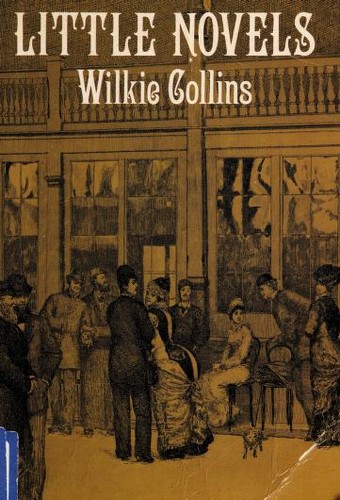
England -- Social life and customs -- 19th century -- Fiction
The hour was midnight; and the friends, whom the most hospitable of men
delighted to assemble round his dinner-table, had taken their leave with
the exception of one guest specially detained by the host, who led him
back to the dining-room.
"You were angry with our friends," Dick began, "when they asked you
about that report of your marriage. You won't be angry with Me. Are you
really going to be the old maid's husband?"
This plain question received a plain reply: "Yes, I am."
Dick took the young lord's hand. Simply and seriously, he said: "Accept
my congratulations."
Howel Beaucourt started as if he had received a blow instead of a
compliment.
"There isn't another man or woman in the whole circle of my
acquaintance," he declared, "who would have congratulated me on marrying
Miss Dulane. I believe you would make allowances for me if I had
committed murder."
"I hope I should," Dick answered gravely. "When a man is my
friend--murder or marriage--I take it for granted that he has a reason
for what he does. Wait a minute. You mustn't give me more credit than
I deserve. I don't agree with you. If I were a marrying man myself, I
shouldn't pick an old maid--I should prefer a young one. That's a matter
of taste. You are not like me. _You_ always have a definite object in
view. I may not know what the object is. Never mind! I wish you joy all
the same."
Beaucourt was not unworthy of the friendship he had inspired. "I should
be ungrateful indeed," he said, "if I didn't tell you what my object is.
You know that I am poor?"
"The only poor friend of mine," Dick remarked, "who has never borrowed
money of me."
Beaucourt went on without noticing this. "I have three expensive
tastes," he said. "I want to get into Parliament; I want to have a
yacht; I want to collect pictures. Add, if you like, the selfish luxury
of helping poverty and wretchedness, and hearing my conscience tell
me what an excellent man I am. I can't do all this on five hundred a
year--but I can do it on forty times five hundred a year. Moral: marry
Miss Dulane."
Listening attentively until the other had done, Dick showed a sardonic
side to his character never yet discovered in Beaucourt's experience of
him.
"I suppose you have made the necessary arrangements," he said. "When
the old lady releases you, she will leave consolation behind her in her
will."
"That's the first ill-natured thing I ever heard you say, Dick. When the
old lady dies, my sense of honor takes fright, and turns its back on
her will. It's a condition on my side, that every farthing of her money
shall be left to her relations."
"Don't you call yourself one of them?"
Public-domain text, read in full here on John Shaqi.
Reviews
Reviews
No reviews yet
Be the first to share your thoughts on this work.
Elsewhere in the archive
Join the Discussion
Join the discussion
Sign in to leave a comment or review.
Sign InorCreate an account