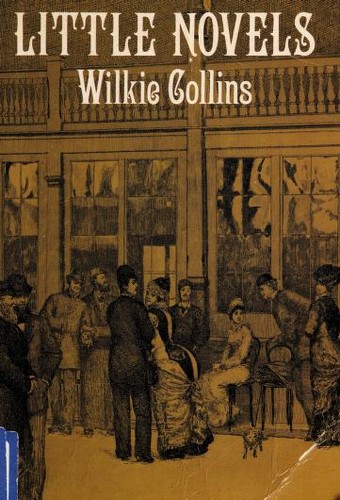
England -- Social life and customs -- 19th century -- Fiction
"But you must not mistake me. I am far from saying that I am a happy
man; I only declare myself to be a contented man. My old wife is a
marvel of good temper and good sense. She trusts me implicitly, and
I have given her no reason to regret it. We have our time for being
together, and our time for keeping apart. Within our inevitable limits
we understand each other and respect each other, and have a truer
feeling of regard on both sides than many people far better matched than
we are in point of age. But you shall judge for yourself. Come and dine
with us, when I return on Wednesday next from the trial trip of my new
yacht. In the meantime I have a service to ask of you.
"My wife's niece has been her companion for years. She has left us to be
married to an officer, who has taken her to India; and we are utterly
at a loss how to fill her place. The good old lady doesn't want much.
A nice-tempered refined girl, who can sing and play to her with some
little taste and feeling, and read to her now and then when her eyes are
weary--there is what we require; and there, it seems, is more than we
can get, after advertising for a week past. Of all the 'companions'
who have presented themselves, not one has turned out to be the sort of
person whom Lady Howel wants.
"Can you help us? In any case, my wife sends you her kind remembrances;
and (true to the old times) I add my love."
On the day which followed the receipt of this letter, Dick paid a
visit to Lady Howel Beaucourt.
"You seem to be excited," she said. "Has anything remarkable happened?"
"Pardon me if I ask a question first," Dick replied. "Do you object to a
young widow?"
"That depends on the widow."
"Then I have found the very person you want. And, oddly enough, your
husband has had something to do with it."
"Do you mean that my husband has recommended her?"
There was an undertone of jealousy in Lady Howel's voice---jealousy
excited not altogether without a motive. She had left it to Beaucourt's
sense of honor to own the truth, if there had been any love affair in
his past life which ought to make him hesitates before he married.
He had justified Miss Dulane's confidence in him; acknowledging an
attachment to a young widow, and adding that she had positively refused
him. "We have not met since," he said, "and we shall never meet again."
Under those circumstances, Miss Dulane had considerately abstained from
asking for any further details. She had not thought of the young widow
again, until Dick's language had innocently inspired her first doubt.
Fortunately for both of them, he was an outspoken man; and he reassured
her unreservedly in these words: "Your husband knows nothing about it."
"Now," she said, "you may tell me how you came to hear of the lady."
Public-domain text, read in full here on John Shaqi.
Reviews
Reviews
No reviews yet
Be the first to share your thoughts on this work.
Elsewhere in the archive
Join the Discussion
Join the discussion
Sign in to leave a comment or review.
Sign InorCreate an account