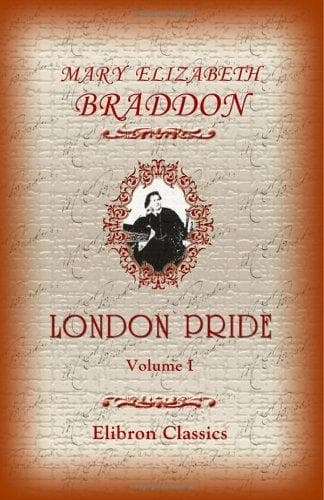
London Pride, Or, When the World Was YoungerBraddon, M. E. (Mary Elizabeth)
History
London Pride, Or, When the World Was Younger
Braddon, M. E. (Mary Elizabeth)
Great Britain -- History -- Charles II, 1660-1685 -- Fiction; London (England) -- Fiction
“It is one thing, sir, to feel that this world is beautiful, and
another to find golden words and phrases which to a prisoner in the
Tower could conjure up as fair a landscape as Claude Lorraine ever
painted. Those sonorous and mellifluous lines which you were so
gracious as to repeat to me, forming part of the great epic which the
world is waiting for, bear witness to the power that can turn words
into music, and make pictures out of the common tongue. That splendid
art, sir, is but given to one man in a century—or in several centuries;
since I know but Dante and Virgil who have ever equalled your vision of
heaven and hell.”
“Do not over-praise me, Denzil, in thy charity to poverty and
affliction. It is pleasing to be understood by a youth who loves hawk
and hound better than books; for it offers the promise of popular
appreciation in years to come. Yet the world is so little athirst for
my epic that I doubt if I shall find a bookseller to give me a few
pounds for the right to print a work that has cost me years of thought
and laborious revision. But at least it has been my consolation in the
long blank night of my decay, and has saved me many a heart-ache. For
while I am building up my verses, and engraving line after line upon
the tablets of memory, I can forget that I am blind, and poor, and
neglected, and that the dear saint I loved was snatched from me in the
noontide of our happiness.”
Denzil talked much of John Milton in his conversations with Angela,
during those rides or rambles, in which Papillon was their only
chaperon. Lady Fareham sauntered, like her royal master; but she rarely
walked a mile at a stretch; and she was pleased to encourage the rural
wanderings that brought her sister and Warner into a closer intimacy,
and promised well for the success of her matrimonial scheme.
“I believe they adore each other already,” she told Fareham one
morning, standing by his side in the great stone porch, to watch those
three youthful figures ride away, aunt and niece side by side, on
palfrey and pony, with Denzil for their cavalier.
“You are always over-quick to be sure of anything that suits your own
fancy, dearest,” answered Fareham, watching them to the curve of the
avenue; “but I see no signs of favour to that solemn youth in your
sister. She suffers his attentions out of pure civility. He is an
accomplished horseman, having given all his life to learning how to
jump a fence gracefully; and his company is at least better than a
groom’s.”
“How scornfully you jeer at him!”
“Oh, I have no more scorn than the Cavalier’s natural contempt for the
Roundhead. A hereditary hatred, perhaps.”
“You say such hard things of his Majesty that one might often take you
to be of Sir Denzil’s way of thinking.”
“I never think about the King. I only wonder. I may sometimes express
my wonderment too freely for a loyal subject.”
“I cannot vouch for Angela, but I will wager that he is deep in love,”
persisted Hyacinth.
Public-domain text, read in full here on John Shaqi.
Reviews
Reviews
No reviews yet
Be the first to share your thoughts on this work.
Elsewhere in the archive
Join the Discussion
Join the discussion
Sign in to leave a comment or review.
Sign InorCreate an account