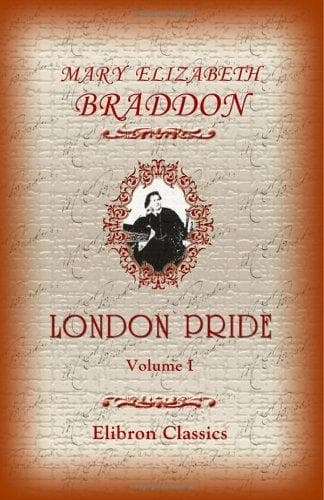
London Pride, Or, When the World Was YoungerBraddon, M. E. (Mary Elizabeth)
History
London Pride, Or, When the World Was Younger
Braddon, M. E. (Mary Elizabeth)
Great Britain -- History -- Charles II, 1660-1685 -- Fiction; London (England) -- Fiction
Hadley Grange, commonly known as the Grange, was in every detail the
antithesis of Chilton Abbey. At the Abbey the eye was dazzled, the mind
was bewildered, by an excess of splendour—an over-much of everything
gorgeous or beautiful. At the Grange sight and mind were rested by the
low tone of colour, the quaker-like precision of form. All the
furniture in the house was Elizabethan, plain, ponderous, the
conscientious work of Oxfordshire mechanics. On one side of the house
there was a bowling green, on the other a physic garden, where odours
of medicinal herbs, camomile, fennel, rosemary, rue, hung ever on the
surrounding air. There was nothing modern in Lady Warner’s house but
the spotless cleanliness; the perfume of last summer’s roses and
lavender; the polished surface of tables and cabinets, oak chests and
oak floors, testifying to the inexorable industry of rustic housemaids.
In all other respects the Grange was like a house that had just
awakened from a century of sleep.
Lady Warner rose from her high-backed chair by the chimney corner in
the oak parlour, and laid aside the book she had been reading, to
welcome her son, startled at seeing him followed by a tall, fair girl
in a black mantle and hood, and a little slip of a thing, with bright
dark eyes and small determined face, pert, pointed, interrogative,
framed in swansdown—a small aërial figure in a white cloth cloak, and a
scarlet brocade frock, under which two little red shoes danced into the
room.
“Mother, I have brought Mrs. Angela Kirkland and her niece to visit you
this Christmas morning.”
“Mrs. Kirkland and her niece are welcome,” and Lady Warner made a deep
curtsy, not like one of Lady Fareham’s sinking curtseys, as of one near
swooning in an ecstasy of politeness, but dignified and inflexible,
straight down and straight up again.
“But as for Christmas, ’tis one of those superstitious observances
which I have ever associated with a Church I abhor.”
Denzil reddened furiously. To have brought this upon his beloved!
Angela drew herself up, and paled at the unexpected assault. The
brutality of it was startling, though she knew, from Denzil’s opinions,
that his mother must be an enemy of her faith.
“Indeed, madam, I am sorry that anybody in England should think it an
ill thing to celebrate the birthday of our Redeemer and Lord,” she
said.
Public-domain text, read in full here on John Shaqi.
Reviews
Reviews
No reviews yet
Be the first to share your thoughts on this work.
Elsewhere in the archive
Join the Discussion
Join the discussion
Sign in to leave a comment or review.
Sign InorCreate an account