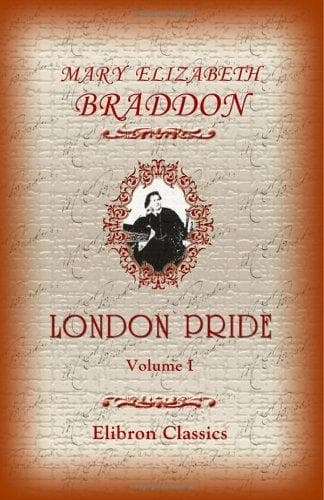
London Pride, Or, When the World Was YoungerBraddon, M. E. (Mary Elizabeth)
History
London Pride, Or, When the World Was Younger
Braddon, M. E. (Mary Elizabeth)
Great Britain -- History -- Charles II, 1660-1685 -- Fiction; London (England) -- Fiction
“Yet his largest expenditure can hardly equal his cousin’s drain upon
the revenue. Mansart is spending millions on Versailles, with his
bastard Italian architecture, his bloated garlands and festoons, his
stone lilies and pomegranates. Charles builds no palaces, initiates no
war——”
“And will leave neither palace nor monument; will have lived only to
have diminished the dignity and importance of his country. Restored to
kingdom and power as if by a miracle, he makes it his chief business to
show Englishmen how well they could have done without him,” said Denzil
Warner, who had been hanging over Angela’s tea-table until just now,
when they both sauntered on to the terrace, the lady’s office being
fulfilled, the little Chinese teapot emptied of its costly contents,
and the tiny tea-cups distributed among the modish few who relished, or
pretended to relish, the new drink.
“You are a Republican, Sir Denzil, fostered by an arrant demagogue!”
exclaimed Masaroon, with a contemptuous shake of his shoulder ribbons.
“You hate the King because he is a King.”
“No, sir, I despise him because he is so much less than a King. Nobody
could hate Charles the Second. He is not big enough.”
“Oh, dem, we want no meddlesome Kings to quarrel with their neighbours,
and set Europe by the ears! The treaty of the Pyrenees may be a fine
thing for France; but how many noble gentlemen’s lives it cost, to say
nothing of the common people! Rowley is the finest gentleman in his
kingdom, and the most good-natured. Eh, gud, sirs! what more would you
have?”
“A MAN—like Henry the Fifth, or Oliver Cromwell, or Elizabeth.”
“Faith, she had need possess the manly virtues, for she must have been
an untowardly female—a sour, lantern-jawed spinster, with all the
inclinations but none of the qualities of a coquette.”
“Greatness has the privilege of small failings, or it would scarce be
human. Elizabeth and Julius Caesar might be excused some harmless
vanities.”
The spring evenings were now mild enough for promenading St. James’s
Park, and the Mall was crowded night after night by the finest company
in London. Hyacinth walked in the Mall, and appeared occasionally in
her coach in Hyde Park; but she repeatedly reminded her friends how
inferior was the mill-round of the Ring to the procession of open
carriages along the Cours la Reine, by the side of the Seine; the
splendour of the women’s dress, outshone sometimes by the extravagant
decoration of their coaches and the richness of their liveries; the
crowds of horsemen, the finest gentlemen in France, riding at the coach
doors, and bandying jests and compliments with Beauty, enthroned in her
triumphal chariot. Gay, joyous sunsets; light laughter; delicate
feasting in Renard’s garden, hard by the Tuileries. To remember that
fairer and different scene was to recall the freshness of youth, the
romance of a first love.
Public-domain text, read in full here on John Shaqi.
Reviews
Reviews
No reviews yet
Be the first to share your thoughts on this work.
Elsewhere in the archive
Join the Discussion
Join the discussion
Sign in to leave a comment or review.
Sign InorCreate an account