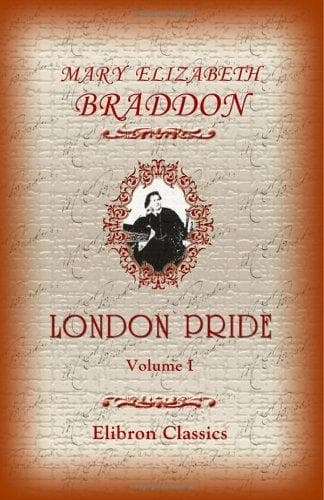
London Pride, Or, When the World Was YoungerBraddon, M. E. (Mary Elizabeth)
History
London Pride, Or, When the World Was Younger
Braddon, M. E. (Mary Elizabeth)
Great Britain -- History -- Charles II, 1660-1685 -- Fiction; London (England) -- Fiction
“At the Tower stairs we stopped to take on board a gentleman in a very
fine peach-blossom suit, and with a huge periwig, at which Papillon
began to laugh, and had to be chid somewhat harshly. He was a very
civil-spoken, friendly person, and he brought with him a lad carrying a
viol. He is an officer of the Admiralty, called Pepys, and, Fareham
tells me, a useful, indefatigable person. My sister met him at
Clarendon House two years ago, and wrote to me about him somewhat
scornfully; but my brother respects him as shrewd and capable, and more
honest than such persons usually are. We were to fetch him to Sayes
Court, where he also was invited by Mr. Evelyn; and in talking to
Henriette and me, he expressed great regret that his wife had not been
included, and he paid my niece compliments upon her grace and beauty
which I could but think very fulsome and showing want of judgment in
addressing a child. And then, seeing me vexed, he hoped I was not
jealous; at which I could hardly command my anger, and rose in a huff
and left him. But he was a person not easy to keep at a distance, and
was following me to the prow of the boat, when Fareham took hold of him
by his cannon sleeve and led him to a seat, where he kept him talking
of the navy and the great ships now a-building to replace those that
have been lost in the Dutch War.
“When we had passed the Pool, and the busy trading ships, and all the
noise of sailors and labourers shipping or unloading cargo, and the
traffic of small boats hastening to and fro, and were out on a broad
reach of the river with the green country on either side, the lad tuned
his viol, and played a pretty, pensive air, and he and Mr. Pepys sang
some verses by Herrick, one of our favourite English poets, set for two
voices—
“‘Gather ye rosebuds while ye may,
Old Time still is a-flying;
And this same flower that smiles to-day,
To-morrow will be dying.”
The boy had a voice like Mere Ursule’s lovely soprano, and Mr. Pepys a
pretty tenor; and you can imagine nothing more silvery sweet than the
union of the two voices to the staccato notes of the viol, dropping in
here and there like music whispered. The setting was Mr. Pepys’ own,
and he seemed overcome with pride when we praised it. When the song was
over, Fareham came to the bench where Papillon and I were sitting, and
asked me what I thought of this fine Admiralty gentleman, whereupon I
confessed I liked the song better than the singer, who at that moment
was strutting on the deck like a peacock, looking at every vessel we
passed as if he were Neptune, and could sink navies with a nod.
Public-domain text, read in full here on John Shaqi.
Reviews
Reviews
No reviews yet
Be the first to share your thoughts on this work.
Elsewhere in the archive
Join the Discussion
Join the discussion
Sign in to leave a comment or review.
Sign InorCreate an account