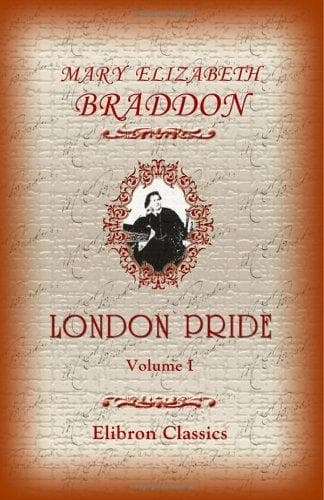
London Pride, Or, When the World Was YoungerBraddon, M. E. (Mary Elizabeth)
History
London Pride, Or, When the World Was Younger
Braddon, M. E. (Mary Elizabeth)
Great Britain -- History -- Charles II, 1660-1685 -- Fiction; London (England) -- Fiction
“What, you have suffered my devotion to pass unperceived? When I have
broken half a dozen coach windows in your service, rattling a glass
down with a vehemence which would have startled a Venus in marble to
turn and recognise an adorer! Round and round the Ring I have driven
for hours, on the chance of a look. Nay, marble is not so coy as
froward beauty! And at the Queen’s chapel have I not knelt at the Mass
morning after morning, at the risk of being thought a Papist, for the
sake of seeing you at prayers; and have envied the Romish dog who
handed you the aspersoir as you went out? And you to be unconscious all
the time!”
“Nay, ’tis so much happier for me, Sir Ralph, since you have given me a
reserve of gratified vanity that will last me a year in the country,
where I shall see nothing but ploughmen and bird-boys.”
“Look out for the scarecrows in Sir John’s fields, for the odds are you
will see me some day disguised as one.”
“Why disguised?” asked his friend Mr. Penington, who had lately
produced a comedy that had been acted three afternoons at the Duke’s
Theatre, and one evening at Court, which may be taken as a prosperous
run for a new play.
Lady Sarah Tewkesbury held forth on the pleasures of a country life,
and lamented that family connections and the necessity of standing well
with the Court constrained her to spend the greater part of her
existence in town.
“I am like Milton,” she said. “I adore a rural life. To hear the cock—
‘From his watchtower in the skies,
When the horse and hound do rise.’
Oh, I love buttercups and daisies above all the Paris finery in the
Exchange; and to steep one’s complexion in May-dew, and to sup on a
syllabub or a dish of frumenty—so cheap, too, while it costs a fortune
but to scrape along in London.”
“The country is well enough for a month at hay-making, to romp with a
bevy of London beauties in the meadows near Tunbridge Wells, or to
dance to a couple of fiddles on the Common by moonlight,” said Mr.
Penington; whereupon all agreed that Tunbridge Wells, Epsom, Doncaster,
and Newmarket were the only country possible to people of intellect.
“I would never go further than Epsom, if I had my will,” said Sir
Ralph; “for I see no pleasure in Newmarket for a man who keeps no
running-horses, and has no more interest in the upshot of a race than
he might have in a maggot match on his own dining-table, did he stake
high enough on the result.”
“But my sister is not to be buried in Buckinghamshire all the year
round,” explained Hyacinth. “I shall fetch her here half a dozen times
in a season; and her shortest visits must be long enough to take the
country freshness out of her complexion, and save her from becoming a
milkmaid.”
Public-domain text, read in full here on John Shaqi.
Reviews
Reviews
No reviews yet
Be the first to share your thoughts on this work.
Elsewhere in the archive
Join the Discussion
Join the discussion
Sign in to leave a comment or review.
Sign InorCreate an account