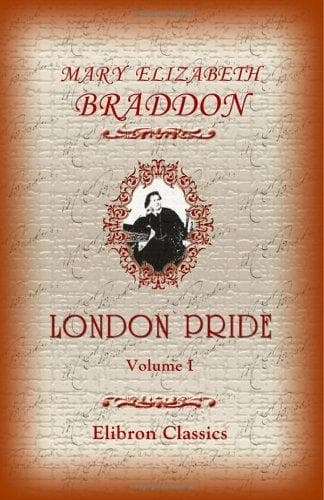
London Pride, Or, When the World Was YoungerBraddon, M. E. (Mary Elizabeth)
History
London Pride, Or, When the World Was Younger
Braddon, M. E. (Mary Elizabeth)
Great Britain -- History -- Charles II, 1660-1685 -- Fiction; London (England) -- Fiction
Angela had drawn away from the little knot of fine ladies and finer
gentlemen, and was sitting in the bay window of an ante-room, with
Henriette and the boy, who were sorely dejected at the prospect of
losing her. The best consolation she could offer was to promise that
they should be invited to the Manor Moat as soon as she and her father
had settled themselves comfortably there—if their mother could spare
them.
Henriette laughed outright at this final clause.
“Spare us!” she cried. “Does she ever want us? I don’t think she knows
when we are in the room, unless we tread upon her gown, when she
screams out ‘Little viper!’ and hits us with her fan.”
“The lightest touch, Papillon; not so hard as you strike your favourite
baby.”
“Oh, she doesn’t hurt me; but the disrespect of it! Her only daughter,
and nearly as high as she is!”
“You are an ungrateful puss to complain, when her ladyship is so kind
as to let you be here to see all her fine company.”
“I am sick of her company, almost always the same, and always talking
about the same things. The King, and the Duke, and the General, and the
navy; or Lady Castlemaine’s jewels, or the last new head from Paris, or
her ladyship’s Flanders lace. It is all as dull as ditch-water now
Monsieur de Malfort is gone. He was always pleasant, and he let me play
on his guitar, though he swore it excruciated him. And he taught me the
new Versailles coranto. There’s no pleasure for any one since he fell
ill and left England.”
“You shall come to the Manor. It will be a change, even though you hate
the country and love London.”
“I have left off loving London. I have had too much of it. If his
lordship let us go to the play-house often it would be different. Oh,
how I loved Philaster—and that exquisite page! Do you think I could act
that character, auntie, if his lordship’s tailor made me such a dress?”
“I think thou hast impudence for anything, dearest.”
“I would rather act that page than Pauline in _Polyeucte_, though
Mademoiselle swears I speak her tirades nearly as well as an actress
she once saw at the Marais, who was too old and fat for the character.
How I should love to be an actress, and to play tragedy and comedy, and
make people cry and laugh! Indeed, I would rather be anything than a
lady—unless I could be exactly like Lady Castlemaine.”
“Ah, Heaven forbid!”
“But why not? I heard Sir Ralph tell mother that, let her behave as
badly as she may, she will always be atop of the tree, and that the
young sparks at the Chapel Royal hardly look at their prayer-books for
gazing at her, and that the King——”
“Ah, sweetheart, I want to hear no more of her!”
“Why, don’t you like her? I thought you did not know her. She never
comes here.”
“Are there any staghounds in the Vale of Aylesbury?” asked the boy, who
had been looking out of the window, watching the boats go by, unheeding
his sister’s babble.
Public-domain text, read in full here on John Shaqi.
Reviews
Reviews
No reviews yet
Be the first to share your thoughts on this work.
Elsewhere in the archive
Join the Discussion
Join the discussion
Sign in to leave a comment or review.
Sign InorCreate an account