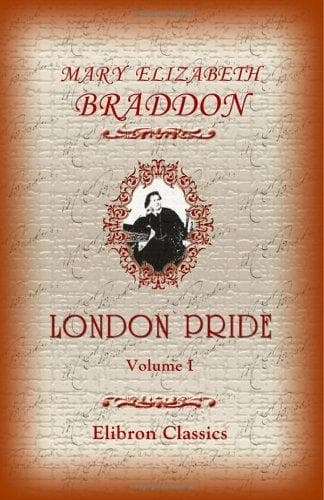
London Pride, Or, When the World Was YoungerBraddon, M. E. (Mary Elizabeth)
History
London Pride, Or, When the World Was Younger
Braddon, M. E. (Mary Elizabeth)
Great Britain -- History -- Charles II, 1660-1685 -- Fiction; London (England) -- Fiction
“Sir Denzil Warner has been over here, his ostensible motive a civil
inquiry after my health; but I could see that his actual purpose was to
hear of you. I told him how happily your simple soul has accommodated
itself to an almost conventual seclusion, and a very inferior style of
living—whereupon he smiled his rapture, and praised you to the skies.
‘Would that she could accommodate herself to my house as easily,’ he
said; ‘she should have every indulgence that an adoring husband could
yield her.’ And then he said much more, but as lovers always sing the
same repetitive song, and have no more strings to their lyre than the
ancients had before Mercury expanded it, I confess to not listening
over carefully, and will leave you to imagine the eloquence of a manly
and honourable love. Ah, sweetheart! you do wrong to reject him. Thou
hast a quiet soothing prettiness of thine own, but art no blazing star
of beauty, like the Stewart, to bring a King to thy feet—he would have
married her if poor Catherine had not disappointed him by her
recovery—and to take a Duke as _pis aller_. Believe me, love, it were
wise of you to become Lady Warner, with an unmortgaged estate, and a
husband who, in these Republican times, may rise to distinction. He is
your only earnest admirer; and a love so steadfast, backed by a fortune
so respectable, should not be discarded lightly.”
Over all these latter passages in her sister’s letter Angela’s eye ran
with a scornful carelessness. Her womanly pride revolted at such petty
schooling—that she should be bidden to accept this young man
gratefully, because he was her only suitor. No one else had ever cared
for her pale insignificance. She looked at her clouded image in the
oblong glass that hung on the panel above her secrétaire, and whose
reflection made any idea of her own looks rather speculative than
precise. It showed her a thoughtful face, too pale for beauty; yet she
could but note the harmony of lines which recalled that Venetian type
familiar to her eye in the Titians and Tintorets at Fareham House.
“I doubt I am good-looking enough for any one to be satisfied with the
outward semblance who valued the soul within,” she thought, as she
turned from the glass with a mournful sigh.
It was not of Denzil she was thinking, but of that other who in slow
contemplative days in the library where he had taught her what books
she ought to love, and where she might never more enter, must naturally
sometimes remember her, and cast some backward thoughts to the hours
they had spent together.
Hyacinth’s letter of matronly counsel was but a week old when Sir John
surprised his daughter one morning, as they sat at table, by the
announcement of a visitor to stay in the house.
“You will order the west room to be got ready, Angela, and bid Marjory
Cook serve us some of her savourest dishes while Sir Denzil stays
here.”
“Sir Denzil!”
Public-domain text, read in full here on John Shaqi.
Reviews
Reviews
No reviews yet
Be the first to share your thoughts on this work.
Elsewhere in the archive
Join the Discussion
Join the discussion
Sign in to leave a comment or review.
Sign InorCreate an account