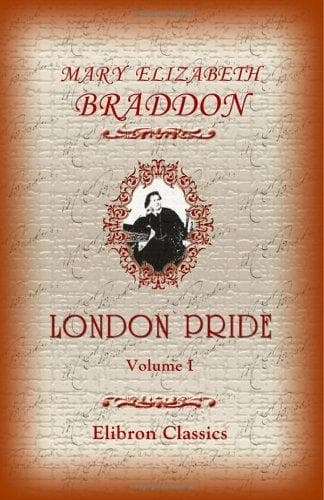
London Pride, Or, When the World Was YoungerBraddon, M. E. (Mary Elizabeth)
History
London Pride, Or, When the World Was Younger
Braddon, M. E. (Mary Elizabeth)
Great Britain -- History -- Charles II, 1660-1685 -- Fiction; London (England) -- Fiction
“It is well that you should be prepared to let her keep her religion;
for I doubt she has a stubborn affection for the creed she learnt in
her childhood. Indeed, it was but the other day she talked of the
cloister; and I fear she has all the disposition to that religious
prison in which her great aunt lived contentedly for the space of a
long lifetime. But it is for you, Denzil, to cure her of that fancy,
and to spare me the pain of seeing my best-beloved child under the
black veil.”
“Indeed, sir, if a love as earnest as man ever experienced—”
“Yes, Denzil, I know you love her; and I love you almost as if you were
my very son. In the years that went by after Hyacinth was born, before
the beginning of trouble, I used to long for a son, and I am afraid I
did sometimes distress my dear wife by dwelling too persistently upon
disappointed hopes. And then came chaos—England in arms, a rebellious
people, a King put upon his defence—and I had leisure to think of none
but my royal master. And in the thick of the strife my poor lamb was
born to me—the bringer of my life’s great sorrow—and there was no more
thought of sons. So, you see, friend, the place in my heart and home
has waited empty for you. Win but yonder shy dove to consent, and we
shall be of one family and of one mind, and I as happy as any
broken-down campaigner in England can be—content to creep to the grave
in obscurity, forgotten by the Prince whose father it is my dear memory
to have served.”
“You loved your King, sir, I take it, with a personal affection.”
“Ah, Denzil, we all loved him. Even the common people—led as they were
by hectoring preachers of sedition, of no more truth or honesty than
the mountebanks that ply their knavish trade round Henry’s statue on
the Pont Neuf—even they, the very rabble, had their hours of loyalty. I
rode with his Majesty from Royston to Hatfield, in ’47, when the people
filled the midsummer air with his name, from hearts melting with love
and pity. They strewed the ways with boughs, and strewed the boughs
with roses. So great honour has been seldom shown to a royal captive.”
“I take it that the lower class are no politicians, and loved their
King for his private virtues.”
Public-domain text, read in full here on John Shaqi.
Reviews
Reviews
No reviews yet
Be the first to share your thoughts on this work.
Elsewhere in the archive
Join the Discussion
Join the discussion
Sign in to leave a comment or review.
Sign InorCreate an account