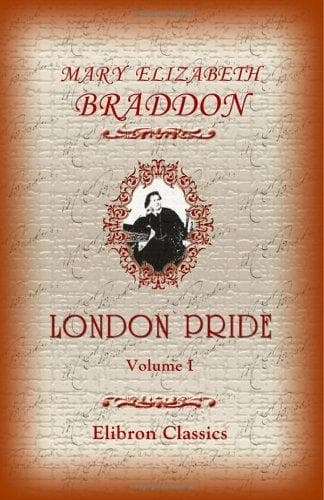
London Pride, Or, When the World Was YoungerBraddon, M. E. (Mary Elizabeth)
History
London Pride, Or, When the World Was Younger
Braddon, M. E. (Mary Elizabeth)
Great Britain -- History -- Charles II, 1660-1685 -- Fiction; London (England) -- Fiction
“Chi lo sa? One has fancies! But my dearest sister has been wise in
good time, and you will be the happiest wife in England; for I believe
your Puritan is a saintly person, the very opposite of our Court
sparks, who are the most incorrigible villains. Ah, sweet, if you heard
the stories Lewin tells me—even of that young Rochester—scarce out of
his teens. And the Duke—not a jot better than the King—and with so much
less grace in his iniquity. Well, you will be married at the Chapel
Royal, and spend your wedding night at Fareham House. We will have a
great supper. His Majesty will come, of course. He owes us that much
civility.”
“Hyacinth, if you would make me happy, let me be married in our dear
mother’s oratory, by your chaplain. Sure, dearest, you know I have
never taken kindly to Court splendours.”
“Have you not? Why, you shone and sparkled like a star, that last night
you were ever at Whitehall, Henri sitting close beside you. ’Twas the
night he took ill of a fever. Was it a fever? I have wondered sometimes
whether there was not a mystery of attempted murder behind that long
sickness.”
“Murder!”
“A deadly duel with a man who hated him. Is not that an attempt at
murder on the part of him who deliberately provokes the quarrel? Well,
it is past, and he is gone. For all the colour of the world I live in,
there might never have been any such person as Henri de Malfort.”
Her airy laugh ended in a sob, which she tried to stifle, but could
not.
“Hyacinth, Hyacinth, why will you persist in being miserable when you
have so little cause for sadness?”
“Have I not cause? Am I not growing old, and robbed of the only friend
who brought gaiety into my life; who understood my thoughts and valued
me? A traitor, I know—like the rest of them. They are all traitors. But
he would have been true had I been kinder, and trusted him.”
“Hyacinth, you are mad! Would you have had him more your friend? He was
too near as it was. Every thought you gave him was an offence against
your husband. Would you have sunk as low as those shameless women the
King admires?”
“Sunk—low? Why, those women are on a pinnacle of
fame—courted—flattered—poetised—painted. They will be famous for
centuries after you and I are forgotten. There is no such thing as
shame nowadays, except that it is shameful to have done nothing to be
ashamed of. I have wasted my life, Angela. There was not a woman at the
Louvre who had my complexion, nor one who could walk a coranto with
more grace. Yet I have consented to be a nobody at two Courts. And now
I am growing old, and my poor painted face shocks me when I chance on
my reflection by daylight; and there is nothing left for me—nothing.”
“Your husband, sister!”
Public-domain text, read in full here on John Shaqi.
Reviews
Reviews
No reviews yet
Be the first to share your thoughts on this work.
Elsewhere in the archive
Join the Discussion
Join the discussion
Sign in to leave a comment or review.
Sign InorCreate an account