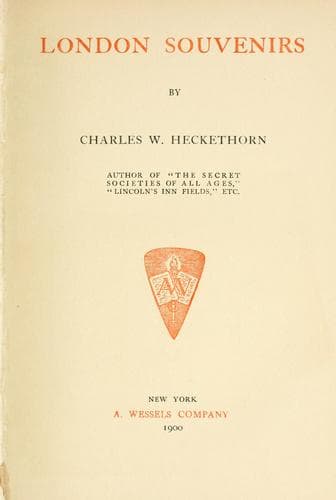
London (England) -- Description and travel; London (England) -- History -- 1800-1950
Vagrants and tramps in those days called themselves by the more
dignified appellation of ’cursitors’; and the counterfeiter of epilepsy
was a ’counterfeit crank’; money-dropping and ring-dropping were even
then old tricks of cozenage. Those who are acquainted with the modern
way of coney-catching, or the confidence trick—and who is not that lives
in London?—will know that the trick is now much simplified, and yields
much quicker and more satisfactory results—to the rogues. And though,
as we mentioned above, the trick has been exposed over and over again,
new fools are found every day to go into the trap. In fact, all the old
rogueries flourish at the present time, besides a few new ones invented
in this century. The holders of sham auctions; the horse-makers, who,
by means of drugs and other devices, make old horses look as good as new
till they are sold; the free foresters, who during the night rob
suburban gardens of roots and flowers, and sell them next day off their
barrows, all ’a-growing and a-blowing’; the dog stealers; the beer and
spirit doctors, who double and treble Master Bung’s stock by vile
adulteration; the sellers of established businesses, which never had any
actual existence—all these are types of venerable institutions which
survive to this day, and not only survive, but flourish in everlasting
youth. The racing, betting and Stock Exchange swindles perform their
eternal merry-go-round, as they did when first started several centuries
ago, and the home employment deception still draws the last shillings
from the purses of poor people. And in most cases, unfortunately, the
law is powerless to reach the rogues; our foolish humanitarianism, the
interests of trade, the freedom of the subject to contract, the
technicalities and quibbles of legislative acts, and the uncertainty as
to their meaning, are at the bottom of all this failure of justice. We
ought to cease prating about the dignity of man—as if there were any
dignity in such paltry rogues!—and return, perhaps in a modified form,
to the drastic remedies of our forefathers, who retaliated on those who
made their neighbour suffer in health or in purse by inflicting on them
bodily pain and personal disgrace, and not merely fining them, as is the
custom with us. In the ’Memorials of London and London Life,’ extracted
from the City Archives, and extending from the years 1272 to 1419, will
be found between twenty and thirty condemnations to the pillory, the
stocks, imprisonment, and being drawn through the city on a hurdle, for
deficiency of weight in bread, coals, etc., for false measure, for
enhancing the price of wheat, for swindling, such as selling brass rings
and chains for gold, for selling false bowstrings, putrid meat, fowls
and fish, and in these latter cases the articles condemned were burnt
under the noses of the culprits, as they stood in the pillory. Even
women had to undergo the punishment of the pillory, one specially
Public-domain text, read in full here on John Shaqi.
Reviews
Reviews
No reviews yet
Be the first to share your thoughts on this work.
Elsewhere in the archive
Join the Discussion
Join the discussion
Sign in to leave a comment or review.
Sign InorCreate an account