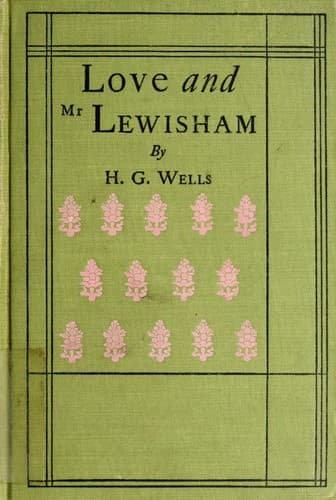
Love and Mr. LewishamWells, H. G. (Herbert George)
General
Love and Mr. Lewisham
Wells, H. G. (Herbert George)
Love stories; Man-woman relationships -- Fiction; Satire; Spiritualists -- England -- Fiction
The morning tumults had given place to an almost scientific calm. Very
soon he was grappling manfully with the question. There was no
disputing it, they had quarrelled. Not once but several times lately
they had quarrelled. It was real quarrelling;--they had stood up
against one another, striking, watching to strike, seeking to
wound. He tried to recall just how things had gone--what he had said
and what she had replied. He could not do it. He had forgotten
phrases and connexions. It stood in his memory not as a sequence of
events but as a collection of disconnected static sayings; each saying
blunt, permanent, inconsecutive like a graven inscription. And of the
scene there came only one picture--Ethel with a burning face and her
eyes shining with tears.
The traffic of a cross street engaged him for a space. He emerged on
the further side full of the vivid contrast of their changed
relations. He made a last effort to indict her, to show that for the
transition she was entirely to blame. She had quarrelled with him, she
had quarrelled deliberately because she was jealous. She was jealous
of Miss Heydinger because she was stupid. But now these accusations
faded like smoke as he put them forth. But the picture of two little
figures back there in the moonlit past did not fade. It was in the
narrows of Kensington High Street that he abandoned her
arraignment. It was beyond the Town Hall that he made the new
step. Was it, after all, just possible that in some degree he himself
rather was the chief person to blame?
It was instantly as if he had been aware of that all the time.
Once he had made that step, he moved swiftly. Not a hundred paces
before the struggle was over, and he had plunged headlong into the
blue abyss of remorse. And all these things that had been so dramatic
and forcible, all the vivid brutal things he had said, stood no longer
graven inscriptions but in letters of accusing flame. He tried to
imagine he had not said them, that his memory played him a trick;
tried to suppose he had said something similar perhaps, but much less
forcible. He attempted with almost equal futility to minimise his own
wounds. His endeavour served only to measure the magnitude of his
fall.
Public-domain text, read in full here on John Shaqi.
Reviews
Reviews
No reviews yet
Be the first to share your thoughts on this work.
Elsewhere in the archive
Join the Discussion
Join the discussion
Sign in to leave a comment or review.
Sign InorCreate an account