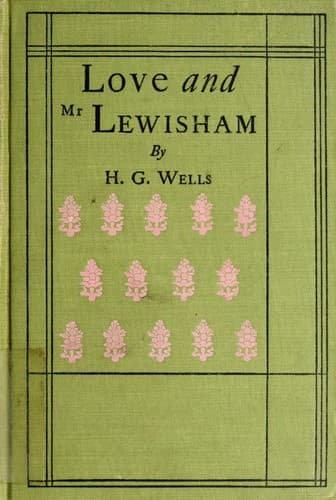
Love and Mr. LewishamWells, H. G. (Herbert George)
General
Love and Mr. Lewisham
Wells, H. G. (Herbert George)
Love stories; Man-woman relationships -- Fiction; Satire; Spiritualists -- England -- Fiction
"Now a fool fails of happiness because of his insufficient mind, he
miscalculates, he stumbles and hobbles, some cant or claptrap whirls
him away; he gets passion out of a book and a wife out of the stews,
or he quarrels on a petty score; threats frighten him, vanity beguiles
him, he fails by blindness. But the knave who is not a fool fails
against the light. Many knaves are fools also--_most_ are--but some
are not. I know--I am a knave but no fool. The essence of your knave
is that he lacks the will, the motive capacity to seek his own greater
good. The knave abhors persistence. Strait is the way and narrow the
gate; the knave cannot keep to it and the fool cannot find it."
Lewisham lost something of what Chaffery was saying by reason of a rap
outside. He rose, but Ethel was before him. He concealed his anxiety
as well as he could; and was relieved when he heard the front door
close again and her footsteps pass into the bedroom by the passage
door. He reverted to Chaffery.
"Has it ever occurred to you," asked Chaffery, apparently apropos of
nothing, "that intellectual conviction is no motive at all? Any more
than a railway map will run a train a mile."
"Eh?" said Lewisham. "Map--run a train a mile--of course, yes. No, it
won't."
"That is precisely my case," said Chaffery. "That is the case of
your pure knave everywhere. We are not fools--because we know. But
yonder runs the highway, windy, hard, and austere, a sort of dry
happiness that will endure; and here is the pleasant by-way--lush,
my boy, lush, as the poets have it, and with its certain man-trap
among the flowers ..."
Ethel returned through the folding doors. She glanced at Lewisham,
remained standing for awhile, sat down in the basket chair as if to
resume some domestic needlework that lay upon the table, then rose and
went back into the bedroom.
Chaffery proceeded to expatiate on the transitory nature of passion
and all glorious and acute experiences. Whole passages of that
discourse Lewisham did not hear, so intent was he upon those
roses. Why had Ethel gone back into the bedroom? Was it possible--?
Presently she returned, but she sat down so that he could not see her
face.
"If there is one thing to set against the wholesome life it is
adventure," Chaffery was saying. "But let every adventurer pray for an
early death, for with adventure come wounds, and with wounds come
sickness, and--except in romances--sickness affects the nervous
system. Your nerve goes. Where are you then, my boy?"
"Ssh! what's that?" said Lewisham.
It was a rap at the house door. Heedless of the flow of golden wisdom,
he went out at once and admitted a gentleman friend of Madam Gadow,
who passed along the passage and vanished down the staircase. When he
returned Chaffery was standing to go.
Public-domain text, read in full here on John Shaqi.
Reviews
Reviews
No reviews yet
Be the first to share your thoughts on this work.
Elsewhere in the archive
Join the Discussion
Join the discussion
Sign in to leave a comment or review.
Sign InorCreate an account