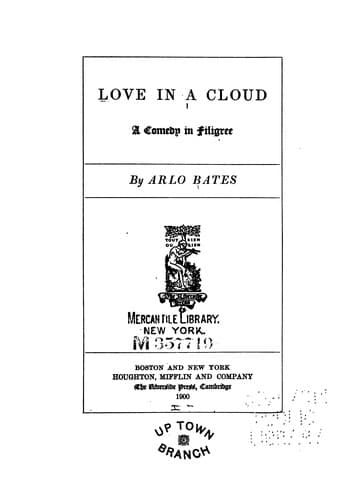
Anonyms and pseudonyms -- Fiction; Authorship -- Fiction; Boston (Mass.) -- Social life and customs -- Fiction
The fierce light of publicity which nowadays beats upon society has
greatly lessened the picturesqueness of life. There is no longer the
dusk favorable to crime, and the man who wishes to be wicked, if careful
of his social standing, is constantly obliged to be content with mere
folly, or, if desperate, with meanness. It is true that from time to
time there are still those, even in the most exclusive circles, who are
guilty of acts genuinely criminal, but these are not, as a rule,
regarded as being in good form. The days when the Borgias invited their
enemies to dinner for the express purpose of poisoning them, or visited
nobles rich in money or in beautiful wives and daughters with the
amiable intent to rob them of these treasures, are over, apparently
forever. In the sixteenth century--to name a time typical--success made
an excuse more than adequate for any moral obliquity; and the result is
that the age still serves thrillingly the romantic dramatist or
novel-writer. To-day success is held more than to justify iniquity in
politics or commerce, but the social world still keeps up some pretext
of not approving. There is in the best society really a good deal of
hesitation about inviting to dinner a man who has murdered his
grandmother or run away with the wife of his friend. Society is of
course not too austere in this respect; it strives to be reasonable, and
it recognizes the principle that every transaction is to be judged by
the laws of its own class. In the financial world, for instance,
conscience is regulated by the stock market, and society assumes that if
a crime has been committed for the sake of money its culpability depends
chiefly upon the smallness of the amount actually secured. Conservative
minds, however, still object to the social recognition of a man who has
notoriously and scandalously broken the commandments. He who has not the
skill or the good taste to display the fruits of his wickedness without
allowing the process by which they were obtained to be known, is looked
at askance by these prudish souls. In all this state of things is great
loss to the romancer, and not a little disadvantage to bold and
adventurous spirits. Were the latter but allowed the freedom which was
enjoyed by their forerunners of the sixteenth century, they would do
much to relieve the tedium under which to-day the best society
languishes.
This tendency of the age toward the suppression of violent and romantic
transgressions in good society was undoubtedly largely responsible for
the course taken by Sibley Langdon. Foiled in his plan of blackmailing
Mrs. Neligage into being his companion on a European tour, he attempted
revenge in a way so petty that even the modern novelist, who stops at
nothing, would have regarded the thing as beneath invention.
Public-domain text, read in full here on John Shaqi.
Reviews
Reviews
No reviews yet
Be the first to share your thoughts on this work.
Elsewhere in the archive
Join the Discussion
Join the discussion
Sign in to leave a comment or review.
Sign InorCreate an account