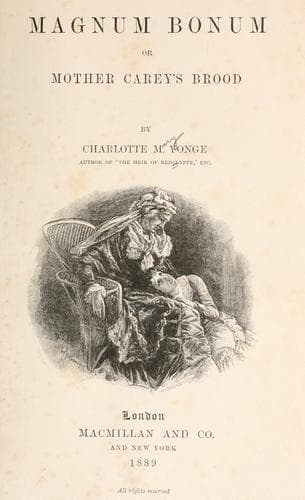
Magnum Bonum; Or, Mother Carey's BroodYonge, Charlotte M. (Charlotte Mary)
General
Magnum Bonum; Or, Mother Carey's Brood
Yonge, Charlotte M. (Charlotte Mary)
Domestic fiction; England -- Social life and customs -- 19th century -- Fiction; Religious fiction
It had been a trying time. While Dr. Medlicott thought he could not
rouse Mrs. Brownlow to the sense of the little fellow’s precarious
condition, deadly alarm lay couched in the bottom of her heart, only
kept at bay by defiantly cheerful plans and sanguine talk.
Then Jock was depressed, and at his age (and, alas! at many others)
being depressed means being cross, and very cross he was to his mother
and his friend, and occasionally to his brother, who, in some moods,
seemed to him merely a rival invalid and candidate for attention, and
whom he now and then threatened with becoming as frightful a muff as
Fordham. He missed Johnny, too, and perhaps longed after Eton. He was
more savage to Cecil than to any one else, treating his best attentions
with growls, railings, and occasionally showers of slippers, books, and
cushions, but, strange as it sounds, the friendship only seemed cemented
by this treatment, and this devoted slave evidently preferred being
abused by Jock to being made much of by any one else.
The regimen was very disagreeable to his English habits, and the tedium
of the place was great. His mother thought it quite enough to account
for his captiousness, and the doctor said it was recovery, but no one
guessed how much was due to the good resolutions he had made on the
moraine and ratified with Cecil. To no one else had he spoken, but all
the more for his reserve did he feel himself bound by the sense of
the shame and dishonour of falling back from vows made in the time of
danger. No one else was aware of it, but John Lucas Brownlow was not of
a character to treat a promise or a resolution lightly. If he could
have got out of his head the continual echo of the two lines about the
monastic intentions of a certain personage when sick, he would have been
infinitely better tempered.
For to poor Jock steadiness appeared renunciation of all “jest and
youthful jollity,” and religion seemed tedious endurance of what might
be important, but, like everything important, was to him very wearisome
and uninteresting. To him all zest and pleasure in life seemed
extinguished, and he would have preferred leaving Eton, where he must
change his habits and amaze his associates. Indeed, he was between
hoping and fearing that all this would there seem folly. But then he
would break his word, the one thing that poor half-heathen Jock truly
cared about.
Meantime he was keeping it as best he knew how under the circumstances,
by minding his prayers more than he had ever done before, trying to
attend when part of the service was read on Sundays, and endeavouring to
follow the Evelyn sabbatical code, but only succeeding in making himself
more dreary and savage on Sunday than on any other day.
Public-domain text, read in full here on John Shaqi.
Reviews
Reviews
No reviews yet
Be the first to share your thoughts on this work.
Elsewhere in the archive
Join the Discussion
Join the discussion
Sign in to leave a comment or review.
Sign InorCreate an account