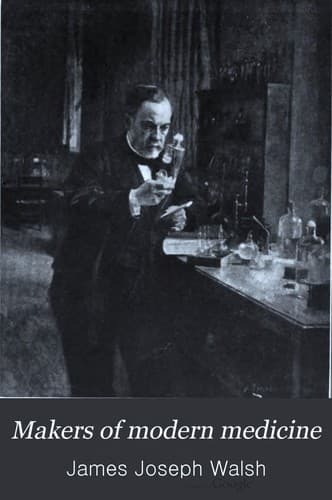
Makers of Modern MedicineWalsh, James J. (James Joseph)
History
Makers of Modern Medicine
Walsh, James J. (James Joseph)
Medicine -- Biography
"'Young men, young men, devote yourselves to those sure {321} and
powerful methods, of which we as yet know only the first secrets.
And I say to all of you, whatever may be your career, never permit
yourselves to be overcome by degrading and unfruitful skepticism.
Neither permit the hours of sadness which come upon a nation to
discourage you. Live in the serene peace of your laboratories and
your libraries. First, ask yourselves, What have I done for my
education? Then, as you advance in life, What have I done for my
country? So that some day that supreme happiness may come to you,
the consciousness of having contributed in some manner to the
progress and welfare of humanity. But, whether our efforts in life
meet with success or failure, let us be able to say, when we near
the great goal, 'I have done what I could.'"
{322}
{323}
JOSEPH O'DWYER, THE INVENTOR OF INTUBATION
{324}
I have hope and wish that the nobler sort of physicians will advance
their thoughts, and not employ their time wholly in the sordidness
of cures; neither be honored for necessity only; but that they will
become coadjutors and instruments in prolonging and renewing the
life of man.
--Bacon
{325}
JOSEPH O'DWYER, THE INVENTOR OF INTUBATION.
At the beginning of the nineteenth century a young medical
practitioner, working faithfully in the wards of his hospital in
Paris, pitying especially the patients who suffered from pulmonary
disease, and realizing how hopeless was their treatment, since medical
science knew so little of the real nature of the ailment from which
they suffered, invented the stethoscope and established the principles
on which modern physical diagnosis is based in a method so complete
that after the lapse of three-quarters of a century very little has
been added to what was then discovered. This genius was the famed
Laennec, of whom we have written in a preceding chapter, who was wont
to spend his days walking the wards of the Necker Hospital in Paris,
caring more for his poor patients than for the nobility and members of
the wealthy classes, who willingly would have taken advantage of his
clinical knowledge so conscientiously gained. Laennec made possible
progress in medicine that places him among the five or six greatest
medical men of all times.
Public-domain text, read in full here on John Shaqi.
Reviews
Reviews
No reviews yet
Be the first to share your thoughts on this work.
Elsewhere in the archive
Join the Discussion
Join the discussion
Sign in to leave a comment or review.
Sign InorCreate an account