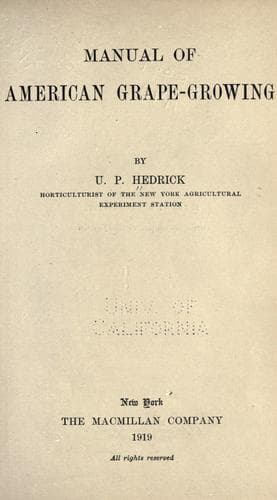
Grapes -- Varieties -- United States; Viticulture -- United States
The vines in the grapery must be watered with considerable care. The
amount of water to be used depends on the composition of the borders
and the season of growth. If the border is loose and well-drained, the
supply of water must be large; if close and retentive, but a small
amount of moisture is required. Watering must not be done during the
period of blossoming, since dry air is necessary for proper
pollination. When the grapes begin to show color, the vines are
heavily watered, after which little if any water is applied. Some
gardeners mulch the vines with hay to retain the moisture in the house
and keep the atmosphere dry.
Ventilating the grapery is another important detail of the season's
work. Proper ventilation is difficult to secure in the early spring
months when the dryness of the sun on the one hand, and cold air on
the other, make it difficult to avoid draughts and regulate the
temperature. Another troublesome time is when the grapes begin to
color, as it is then necessary for the grapery to have air at night;
but when too much air enters, there is danger from mildew. Towards the
end of the season, all parts of the plant become harder in texture and
the grapery may then be more generously aired. After the fruit is cut,
the houses are ventilated in full so that the wood may ripen properly.
PESTS
Several pests vex the gardener in growing grapes indoors. Of these,
mealy-bug, red-spider, thrips and mildew are most troublesome. In a
well-conducted grapery, there is never an intermission in the warfare
against these pests.
Mealy-bug is usually a sign of sloth on the part of the gardener. In
a grapery devoted exclusively to grape-growing, it should never be
seen, but, since gardeners must often grow other plants in the
grapery, mealy-bug sooner or later appears and is often hard to
dislodge. It is best repelled by removing the loose bark on the trunks
which harbor the pest and then washing with kerosene emulsion. When
this becomes necessary, not only the vines but the rafters and all
parts of the house should be sprayed with the emulsion.
Red-spider is another pest usually found in the grapery, but it
thrives only in a dry atmosphere and is easily gotten rid of by
syringing. As soon as red-spider appears in a house its appearance is
usually known by the reddish tinge on the foliage; syringing should be
kept up until the pest is disposed of, keeping the house damp in all
except dull weather. Syringing is done only when plenty of air can be
given and when it can be followed by sunlight so that the water
remains on the vines as short a time as possible.
Thrips, another small insect, is sometimes troublesome but not often
and is now easily controlled by applications of nicotine. Much care
must be taken in the application of nicotine late in the season,
otherwise the fruit will be injured.
Public-domain text, read in full here on John Shaqi.
Reviews
Reviews
No reviews yet
Be the first to share your thoughts on this work.
Elsewhere in the archive
Join the Discussion
Join the discussion
Sign in to leave a comment or review.
Sign InorCreate an account