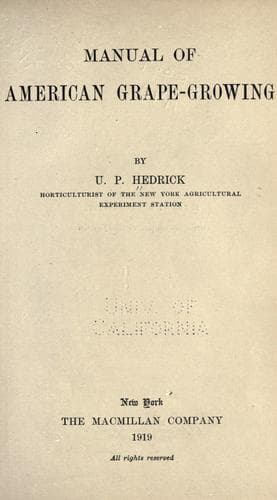
Grapes -- Varieties -- United States; Viticulture -- United States
Vine vigorous, hardy, productive. Canes very long, dark
reddish-brown, covered with bloom; nodes enlarged, flattened;
internodes very long; tendrils continuous, sometimes intermittent,
long, bifid. Leaves very large; upper surface dark green, glossy;
lower surface pale green, smooth; leaf entire, terminus acuminate;
petiolar sinus very deep, narrow, often closed and overlapping;
basal and lateral sinuses usually lacking; teeth shallow, wide.
Flowers self-sterile, open very early; stamens reflexed.
Fruit mid-season, keeps well. Clusters medium in size, short,
slender, cylindrical, single-shouldered, compact; pedicel short,
slender with a few inconspicuous warts; brush very short,
wine-colored. Berries small, round, black, glossy with heavy
bloom, persistent, firm; skin thin, tough, adherent with much
wine-colored pigment, astringent; flesh dark green, translucent,
juicy, fine-grained, tough, sprightly, spicy, tart; fair in
quality. Seeds adherent, one to five, medium in size, broad,
short, very plump, brown.
MARTHA
(Labrusca, Vinifera)
Martha was at one time a popular green grape, but the introduction of
superior varieties has reduced its popularity until now it is but
little grown. It is a seedling of Concord and resembles its parent,
differing chiefly as follows: fruit green, a week earlier, bunch and
berry smaller, flavor far better, being sweeter, more delicate and
less foxy. The vine of Martha is a lighter shade of green, is less
robust, and the blossoms open a few days earlier than those of
Concord. One of the defects of Martha, and the chief cause of its
going out of favor, is that it does not keep nor ship well. The
variety is still being planted in the South but is generally abandoned
in the North. Samuel Miller, Calmdale, Pennsylvania, grew Martha from
seed of Concord; it was introduced about 1868.
Vine hardy, productive, susceptible to attacks of mildew. Canes
long, dark reddish-brown, surface with thin bloom, roughened;
nodes enlarged, slightly flattened; tendrils continuous, or
intermittent, bifid. Leaves large, thick; upper surface light
green; lower surface light bronze, heavily pubescent; lobes
wanting or faint; petiolar sinus shallow, very wide; teeth
irregular. Flowers self-fertile, open in mid-season; stamens
upright.
Fruit early mid-season. Clusters medium in size, tapering,
single-shouldered, loose; pedicel short, slender; brush very
short, green. Berries medium in size, round, light green with thin
bloom, persistent; skin thin, very tender, adherent; flesh pale
green, juicy, tough, fine-grained, slightly foxy; very good. Seeds
few in number, adherent, broad, blunt, dark brown.
MASSASOIT
(Labrusca, Vinifera)
Public-domain text, read in full here on John Shaqi.
Reviews
Reviews
No reviews yet
Be the first to share your thoughts on this work.
Elsewhere in the archive
Join the Discussion
Join the discussion
Sign in to leave a comment or review.
Sign InorCreate an account