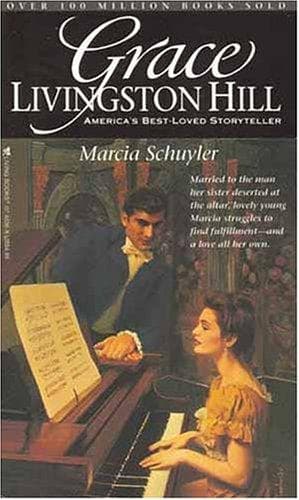
He had white fingers, and he ran them over the keys with an air of being
at home among them, light little airs dripping from his touch like dew
from a glistening grass blade. Marcia felt there were butterflies in the
air, and buzzing bees, and fairy flowers dancing on the slightest of
stems, with a sky so blue it seemed to be filled with the sound of lily
bells. The music he played was of the nature of what would be styled
to-day “popular,” for this man was master of nothing but having a good
time. Quick music with a jingle he played, that to the puritanic-bred girl
suggested nothing but a heart bubbling over with gladness, but he meant it
should make her heart flutter and her foot beat time to the tripping
measure. In his world feet were attuned to gay music. But Marcia stood
with quiet dignity a little away from the instrument, her lips parted, her
eyes bright with the pleasure of the melody, her hands clasped, and her
breath coming quickly. She was all absorbed with the music. All
unknowingly Marcia had placed herself where the light from the window fell
full across her face, and every flitting expression as she followed the
undulant sounds was visible. The young man gazed, almost as much pleased
with the lovely face as Marcia was with the music.
At last he drew a chair quite near his own seat.
“Come and sit down,” he said, “and I will sing to you. You did not know I
could sing, too, did you? Oh, I can. But you must sit down for I couldn’t
sing right when you are standing.”
He ended with his fascinating smile, and Marcia shyly sat down, though she
drew the chair a bit back from where he had placed it and sat up quite
straight and stiff with her shoulders erect and her head up. She had
forgotten her distrust of the man in what seemed to her his wonderful
music. It was all new and strange to her, and she could not know how
little there really was to it. She had decided as he played that she liked
the kind best that made her think of the birds and the sunny sky, rather
than the wild whirlly kind that seemed all a mad scramble. She meant to
ask him to play over again what he played at the beginning, but he struck
into a Scotch love ballad. The melody intoxicated her fancy, and her face
shone with pleasure. She had not noticed the words particularly, save that
they were of love, and she thought with pain of David and Kate, and how
the pleading tenderness might have been his heart calling to hers not to
forget his love for her. But Harry Temple mistook her expression for one
of interest in himself. With his eyes still upon hers, as a cat might
mesmerize a bird, he changed into a minor wail of heart-broken love, whose
sadness brought great tears to Marcia’s eyes, and deep color to her
already burning cheeks, while the music throbbed out her own half-realized
loneliness and sorrow. It was as if the sounds painted for her a picture
of what she had missed out of love, and set her sorrow flowing tangibly.
Public-domain text, read in full here on John Shaqi.
Reviews
Reviews
No reviews yet
Be the first to share your thoughts on this work.
Elsewhere in the archive
Join the Discussion
Join the discussion
Sign in to leave a comment or review.
Sign InorCreate an account