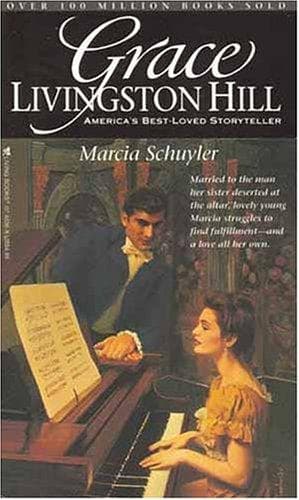
The Schuylers were one of the few families in those days that possessed a
musical instrument, and it had been the delight of Marcia’s heart. She
seemed to have a natural talent for music, and many an hour she spent at
the old spinet drawing tender tones from the yellowed keys. The spinet had
been in the family for a number of years and very proud had the Schuyler
girls been of it. Kate could rattle off gay waltzes and merry, rollicking
tunes that fairly made the feet of the sedate village maidens flutter in
time to their melody, but Marcia’s music had always been more tender and
spiritual. Dear old hymns, she loved, and some of the old classics.
“Stupid old things without any tune,” Kate called them. But Marcia
persevered in playing them until she could bring out the beautiful
passages in a way that at least satisfied herself. Her one great desire
had been to take lessons of a real musician and be able to play the
wonderful things that the old masters had composed. It is true that very
few of these had come in her way. One somewhat mutilated copy of Handel’s
“Creation,” a copy of Haydn’s “Messiah,” and a few fragments of an old
book of Bach’s Fugues and Preludes. Many of these she could not play at
all, but others she had managed to pick out. A visit from a cousin who
lived in Boston and told of the concerts given there by the Handel and
Haydn Society had served to strengthen her deeper interest in music. The
one question that had been going over in her mind ever since she awoke had
been whether there was a musical instrument in the house. She felt that if
there was not she would miss the old spinet in her father’s house more
than any other thing about her childhood’s home.
So with fear and trepidation she entered the darkened room, where the
careful aunts had drawn the thick green shades. The furniture stood about
in shadowed corners, and every footfall seemed a fearsome thing.
Marcia’s bright eyes hurried furtively about, noting the great glass knobs
that held the lace curtains with heavy silk cords, the round mahogany
table, with its china vase of “everlastings,” the high, stiff-backed
chairs all decked in elaborate antimacassars of intricate pattern. Then,
in the furthest corner, shrouded in dark coverings she found what she was
searching for. With a cry she sprang to it, touched its polished wood with
gentle fingers, and lovingly felt for the keyboard. It was closed. Marcia
pushed up the shade to see better, and opened the instrument cautiously.
It was a pianoforte of the latest pattern, and with exclamations of
delight she sat down and began to strike chords, softly at first, as if
half afraid, then more boldly. The tone was sweeter than the old spinet,
or the harpsichord owned by Squire Hartrandt. Marcia marvelled at the
volume of sound. It filled the room and seemed to echo through the empty
halls.
Public-domain text, read in full here on John Shaqi.
Reviews
Reviews
No reviews yet
Be the first to share your thoughts on this work.
Elsewhere in the archive
Join the Discussion
Join the discussion
Sign in to leave a comment or review.
Sign InorCreate an account