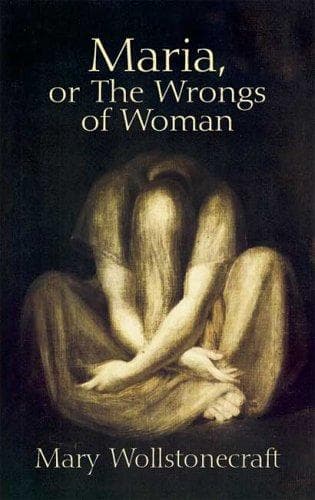
Maria; Or, The Wrongs of WomanWollstonecraft, Mary
General
Maria; Or, The Wrongs of Woman
Wollstonecraft, Mary
Autobiographical fiction; Feminist fiction; Women -- Fiction
“Women who have lost their husband’s affection, are justly reproved for
neglecting their persons, and not taking the same pains to keep, as to
gain a heart; but who thinks of giving the same advice to men, though
women are continually stigmatized for being attached to fops; and from
the nature of their education, are more susceptible of disgust? Yet why
a woman should be expected to endure a sloven, with more patience than
a man, and magnanimously to govern herself, I cannot conceive; unless
it be supposed arrogant in her to look for respect as well as a
maintenance. It is not easy to be pleased, because, after promising to
love, in different circumstances, we are told that it is our duty. I
cannot, I am sure (though, when attending the sick, I never felt
disgust) forget my own sensations, when rising with health and spirit,
and after scenting the sweet morning, I have met my husband at the
breakfast table. The active attention I had been giving to domestic
regulations, which were generally settled before he rose, or a walk,
gave a glow to my countenance, that contrasted with his squallid
appearance. The squeamishness of stomach alone, produced by the last
night’s intemperance, which he took no pains to conceal, destroyed my
appetite. I think I now see him lolling in an arm-chair, in a dirty
powdering gown, soiled linen, ungartered stockings, and tangled hair,
yawning and stretching himself. The newspaper was immediately called
for, if not brought in on the tea-board, from which he would scarcely
lift his eyes while I poured out the tea, excepting to ask for some
brandy to put into it, or to declare that he could not eat. In answer
to any question, in his best humour, it was a drawling ‘What do you
say, child?’ But if I demanded money for the house expences, which I
put off till the last moment, his customary reply, often prefaced with
an oath, was, ‘Do you think me, madam, made of money?’—The butcher, the
baker, must wait; and, what was worse, I was often obliged to witness
his surly dismission of tradesmen, who were in want of their money, and
whom I sometimes paid with the presents my uncle gave me for my own
use.
“At this juncture my father’s mistress, by terrifying his conscience,
prevailed on him to marry her; he was already become a methodist; and
my brother, who now practised for himself, had discovered a flaw in the
settlement made on my mother’s children, which set it aside, and he
allowed my father, whose distress made him submit to any thing, a tithe
of his own, or rather our fortune.
Public-domain text, read in full here on John Shaqi.
Reviews
Reviews
No reviews yet
Be the first to share your thoughts on this work.
Elsewhere in the archive
Join the Discussion
Join the discussion
Sign in to leave a comment or review.
Sign InorCreate an account