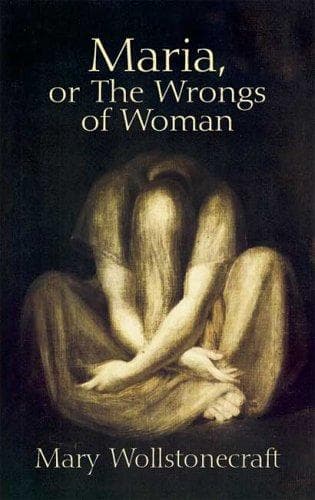
Maria; Or, The Wrongs of WomanWollstonecraft, Mary
General
Maria; Or, The Wrongs of Woman
Wollstonecraft, Mary
Autobiographical fiction; Feminist fiction; Women -- Fiction
“My sisters had left school, but were unable to endure home, which my
father’s wife rendered as disagreeable as possible, to get rid of girls
whom she regarded as spies on her conduct. They were accomplished, yet
you can (may you never be reduced to the same destitute state!)
scarcely conceive the trouble I had to place them in the situation of
governesses, the only one in which even a well-educated woman, with
more than ordinary talents, can struggle for a subsistence; and even
this is a dependence next to menial. Is it then surprising, that so
many forlorn women, with human passions and feelings, take refuge in
infamy? Alone in large mansions, I say alone, because they had no
companions with whom they could converse on equal terms, or from whom
they could expect the endearments of affection, they grew melancholy,
and the sound of joy made them sad; and the youngest, having a more
delicate frame, fell into a decline. It was with great difficulty that
I, who now almost supported the house by loans from my uncle, could
prevail on the _master_ of it, to allow her a room to die in. I watched
her sick bed for some months, and then closed her eyes, gentle spirit!
for ever. She was pretty, with very engaging manners; yet had never an
opportunity to marry, excepting to a very old man. She had abilities
sufficient to have shone in any profession, had there been any
professions for women, though she shrunk at the name of milliner or
mantua-maker as degrading to a gentlewoman. I would not term this
feeling false pride to any one but you, my child, whom I fondly hope to
see (yes; I will indulge the hope for a moment!) possessed of that
energy of character which gives dignity to any station; and with that
clear, firm spirit that will enable you to choose a situation for
yourself, or submit to be classed in the lowest, if it be the only one
in which you can be the mistress of your own actions.
“Soon after the death of my sister, an incident occurred, to prove to
me that the heart of a libertine is dead to natural affection; and to
convince me, that the being who has appeared all tenderness, to gratify
a selfish passion, is as regardless of the innocent fruit of it, as of
the object, when the fit is over. I had casually observed an old,
meanlooking woman, who called on my husband every two or three months
to receive some money. One day entering the passage of his little
counting-house, as she was going out, I heard her say, ‘The child is
very weak; she cannot live long, she will soon die out of your way, so
you need not grudge her a little physic.’
“‘So much the better,’ he replied,’ and pray mind your own business,
good woman.’
“I was struck by his unfeeling, inhuman tone of voice, and drew back,
determined when the woman came again, to try to speak to her, not out
of curiosity, I had heard enough, but with the hope of being useful to
a poor, outcast girl.
Public-domain text, read in full here on John Shaqi.
Reviews
Reviews
No reviews yet
Be the first to share your thoughts on this work.
Elsewhere in the archive
Join the Discussion
Join the discussion
Sign in to leave a comment or review.
Sign InorCreate an account