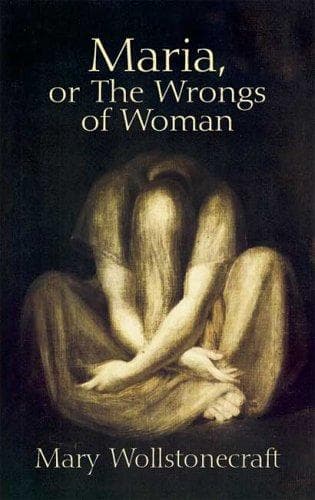
Maria; Or, The Wrongs of WomanWollstonecraft, Mary
General
Maria; Or, The Wrongs of Woman
Wollstonecraft, Mary
Autobiographical fiction; Feminist fiction; Women -- Fiction
“He became, unaccountable as was the change, tender and attentive; and,
attacking my weak side, made a confession of his follies, and lamented
the embarrassments in which I, who merited a far different fate, might
be involved. He besought me to aid him with my counsel, praised my
understanding, and appealed to the tenderness of my heart.
“This conduct only inspired me with compassion. I wished to be his
friend; but love had spread his rosy pinions and fled far, far away;
and had not (like some exquisite perfumes, the fine spirit of which is
continually mingling with the air) left a fragrance behind, to mark
where he had shook his wings. My husband’s renewed caresses then became
hateful to me; his brutality was tolerable, compared to his distasteful
fondness. Still, compassion, and the fear of insulting his supposed
feelings, by a want of sympathy, made me dissemble, and do violence to
my delicacy. What a task!
“Those who support a system of what I term false refinement, and will
not allow great part of love in the female, as well as male breast, to
spring in some respects involuntarily, may not admit that charms are as
necessary to feed the passion, as virtues to convert the mellowing
spirit into friendship. To such observers I have nothing to say, any
more than to the moralists, who insist that women ought to, and can
love their husbands, because it is their duty. To you, my child, I may
add, with a heart tremblingly alive to your future conduct, some
observations, dictated by my present feelings, on calmly reviewing this
period of my life. When novelists or moralists praise as a virtue, a
woman’s coldness of constitution, and want of passion; and make her
yield to the ardour of her lover out of sheer compassion, or to promote
a frigid plan of future comfort, I am disgusted. They may be good
women, in the ordinary acceptation of the phrase, and do no harm; but
they appear to me not to have those ‘finely fashioned nerves,’ which
render the senses exquisite. They may possess tenderness; but they want
that fire of the imagination, which produces _active_ sensibility, and
_positive virtue_. How does the woman deserve to be characterized, who
marries one man, with a heart and imagination devoted to another? Is
she not an object of pity or contempt, when thus sacrilegiously
violating the purity of her own feelings? Nay, it is as indelicate,
when she is indifferent, unless she be constitutionally insensible;
then indeed it is a mere affair of barter; and I have nothing to do
with the secrets of trade. Yes; eagerly as I wish you to possess true
rectitude of mind, and purity of affection, I must insist that a
heartless conduct is the contrary of virtuous. Truth is the only basis
of virtue; and we cannot, without depraving our minds, endeavour to
please a lover or husband, but in proportion as he pleases us. Men,
more effectually to enslave us, may inculcate this partial morality,
and lose sight of virtue in subdividing it into the duties of
Public-domain text, read in full here on John Shaqi.
Reviews
Reviews
No reviews yet
Be the first to share your thoughts on this work.
Elsewhere in the archive
Join the Discussion
Join the discussion
Sign in to leave a comment or review.
Sign InorCreate an account