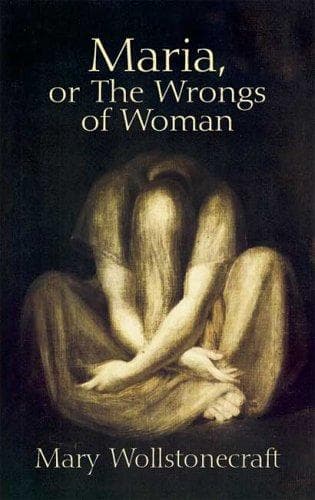
Maria; Or, The Wrongs of WomanWollstonecraft, Mary
General
Maria; Or, The Wrongs of Woman
Wollstonecraft, Mary
Autobiographical fiction; Feminist fiction; Women -- Fiction
“After leaving, what the law considers as my home, I was hunted like a
criminal from place to place, though I contracted no debts, and
demanded no maintenance—yet, as the laws sanction such proceeding, and
make women the property of their husbands, I forbear to animadvert.
After the birth of my daughter, and the death of my uncle, who left a
very considerable property to myself and child, I was exposed to new
persecution; and, because I had, before arriving at what is termed
years of discretion, pledged my faith, I was treated by the world, as
bound for ever to a man whose vices were notorious. Yet what are the
vices generally known, to the various miseries that a woman may be
subject to, which, though deeply felt, eating into the soul, elude
description, and may be glossed over! A false morality is even
established, which makes all the virtue of women consist in chastity,
submission, and the forgiveness of injuries.
“I pardon my oppressor—bitterly as I lament the loss of my child, torn
from me in the most violent manner. But nature revolts, and my soul
sickens at the bare supposition, that it could ever be a duty to
pretend affection, when a separation is necessary to prevent my feeling
hourly aversion.
“To force me to give my fortune, I was imprisoned—yes; in a private
mad-house.—There, in the heart of misery, I met the man charged with
seducing me. We became attached—I deemed, and ever shall deem, myself
free. The death of my babe dissolved the only tie which subsisted
between me and my, what is termed, lawful husband.
“To this person, thus encountered, I voluntarily gave myself, never
considering myself as any more bound to transgress the laws of moral
purity, because the will of my husband might be pleaded in my excuse,
than to transgress those laws to which [the policy of artificial
society has] annexed [positive] punishments.—While no command of a
husband can prevent a woman from suffering for certain crimes, she must
be allowed to consult her conscience, and regulate her conduct, in some
degree, by her own sense of right. The respect I owe to myself,
demanded my strict adherence to my determination of never viewing Mr.
Venables in the light of a husband, nor could it forbid me from
encouraging another. If I am unfortunately united to an unprincipled
man, am I for ever to be shut out from fulfilling the duties of a wife
and mother?—I wish my country to approve of my conduct; but, if laws
exist, made by the strong to oppress the weak, I appeal to my own sense
of justice, and declare that I will not live with the individual, who
has violated every moral obligation which binds man to man.
Public-domain text, read in full here on John Shaqi.
Reviews
Reviews
No reviews yet
Be the first to share your thoughts on this work.
Elsewhere in the archive
Join the Discussion
Join the discussion
Sign in to leave a comment or review.
Sign InorCreate an account