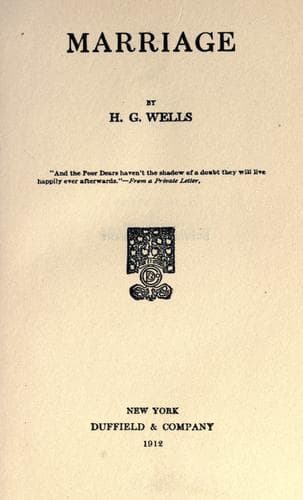
Labrador (N.L.) -- Fiction; London (England) -- Fiction; Love stories, English
For Blenkins Trafford concealed an exquisite dislike and contempt; and
Blenkins had a considerable admiration for Trafford, based on extensive
misunderstandings. Blenkins admired Trafford because he was good-looking
and well-dressed, with a beautiful and successful wife, because he had
become reasonably rich very quickly and easily, was young and a Fellow
of the Royal Society with a reputation that echoed in Berlin, and very
perceptibly did not return Blenkins' admiration. All these things filled
Blenkins with a desire for Trafford's intimacy, and to become the
associate of the very promising political career that it seemed to him,
in spite of Trafford's repudiations, was the natural next step in a
deliberately and honourably planned life. He mistook Trafford's silences
and detachment for the marks of a strong, silent man, who was scheming
the immense, vulgar, distinguished-looking achievements that appeal to
the Blenkins mind. Blenkins was a sentimentally loyal party Liberal, and
as he said at times to Hart and Weston Massinghay: "If those other
fellows get hold of him----!"
Blenkins was the fine flower of Oxford Liberalism and the Tennysonian
days. He wanted to be like King Arthur and Sir Galahad, with the merest
touch of Launcelot, and to be perfectly upright and splendid and very,
very successful. He was a fair, tenoring sort of person with an
Arthurian moustache and a disposition to long frock coats. It had been
said of him that he didn't dress like a gentleman, but that he dressed
more like a gentleman than a gentleman ought to dress. It might have
been added that he didn't behave like a gentleman, but that he behaved
more like a gentleman than a gentleman ought to behave. He didn't think,
but he talked and he wrote more thoughtfully in his leaders, and in the
little dialogues he wrote in imitation of Sir Arthur Helps, than any
other person who didn't think could possibly do. He was an orthodox
Churchman, but very, very broad; he held all the doctrines, a
distinguished sort of thing to do in an age of doubt, but there was a
quality about them as he held them--as though they had been run over by
something rather heavy. It was a flattened and slightly obliterated
breadth--nothing was assertive, but nothing, under examination, proved
to be altogether gone. His profuse thoughtfulness was not confined to
his journalistic and literary work, it overflowed into Talks. He was a
man for Great Talks, interminable rambling floods of boyish observation,
emotional appreciation, and silly, sapient comment. He loved to discuss
"Who are the Best Talkers now Alive?" He had written an essay, _Talk in
the Past_. He boasted of week-ends when the Talk had gone on from the
moment of meeting in the train to the moment of parting at Euston, or
Paddington, or Waterloo; and one or two hostesses with embittered
memories could verify his boasting. He did his best to make the club a
Talking Club, and loved to summon men to a growing circle of chairs....
Public-domain text, read in full here on John Shaqi.
Reviews
Reviews
No reviews yet
Be the first to share your thoughts on this work.
Elsewhere in the archive
Join the Discussion
Join the discussion
Sign in to leave a comment or review.
Sign InorCreate an account