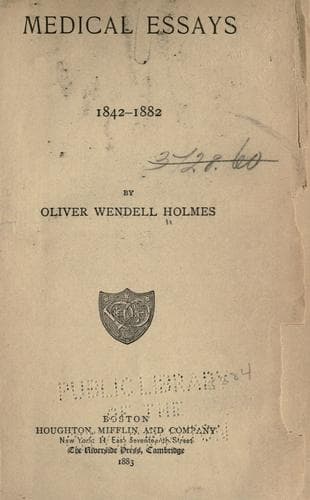
Education, Medical -- Massachusetts -- 19th century; Homeopathy; Libraries, Medical -- Massachusetts -- 19th century; Medicine
He had not miscalculated his chances in life. He very soon rose into a
good practice, and began the founding of that reputation which grew with
his years, until he stood by general consent at the head of his chosen
branch of the profession, to say the least, in this city and in all this
region of country. His skill and wisdom were the last tribunal to which
the sick and suffering could appeal. The community trusted and loved
him, the profession recognized him as the noblest type of the physician.
The young men whom he had taught wandered through foreign hospitals;
where they learned many things that were valuable, and many that were
curious; but as they grew older and began to think more of their ability
to help the sick than their power of talking about phenomena, they began
to look back to the teaching of Dr. Jackson, as he, after his London
experience, looked back to that of Dr. Holyoke. And so it came to be at
last that the bare mention of his name in any of our medical assemblies
would call forth such a tribute of affectionate regard as is only
yielded to age when it brings with it the record of a life spent in well
doing.
No accident ever carries a man to eminence such as his in the medical
profession. He who looks for it must want it earnestly and work for it
vigorously; Nature must have qualified him in many ways, and education
must have equipped him with various knowledge, or his reputation will
evaporate before it reaches the noon-day blaze of fame. How did Dr.
Jackson gain the position which all conceded to him? In the answer to
this question some among you may find a key that shall unlock the gate
opening on that fair field of the future of which all dream but which
not all will ever reach.
First of all, he truly loved his profession. He had no intellectual
ambitions outside of it, literary, scientific or political. To him it
was occupation enough to apply at the bedside the best of all that he
knew for the good of his patient; to protect the community against the
inroads of pestilence; to teach the young all that he himself had been
taught, with all that his own experience had added; to leave on record
some of the most important results of his long observation.
Public-domain text, read in full here on John Shaqi.
Reviews
Reviews
No reviews yet
Be the first to share your thoughts on this work.
Elsewhere in the archive
Join the Discussion
Join the discussion
Sign in to leave a comment or review.
Sign InorCreate an account