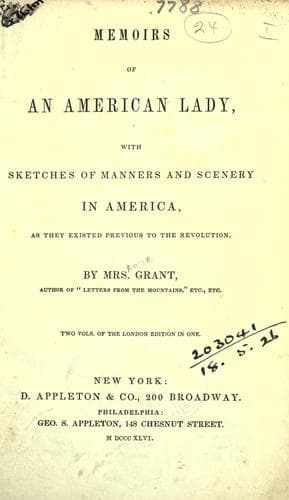
Memoirs of an American Lady: With Sketches of Manners and Scenery in America, as They Existed Previous to the RevolutionGrant, Anne MacVicar
History
Memoirs of an American Lady: With Sketches of Manners and Scenery in America, as They Existed Previous to the Revolution
Grant, Anne MacVicar
Indians of North America; New York (State) -- Social life and customs -- To 1775; Schuyler, Catalina, 1701-1778 or 1779
in life, be surrounded by the objects of his affection and beneficence.
This consecrated spot, about the size of a small flower garden, was
inclosed for this purpose, and a tombstone, with a suitable inscription,
erected over the grave, where this excellent person’s relict proposed
her ashes should mingle with his. In the mean time, though by
continually speaking of her deceased friend, she passed the day without
much visible agitation, she had fallen into a habit of vigilance—rarely
sleeping till morning, and suffering through the silent hours from a
periodical agony, for such it might be called, with which she was
regularly visited. She had a confidante in this secret suffering; a
decent and pious woman, who, on the death of her husband, a serjeant in
the army, had been received into this family as a kind of upper
domestic; and found herself so happy, and made herself so useful in
teaching, reading, and needle-work to the children, that she still
remained. This good woman slept in aunt’s room; and when all the family
were at rest, she used to accompany her to a small distance from the
tomb which contained those remains so dear to her. Madame, in the mean
time, entered alone into the hallowed inclosure, and there indulged her
unavailing sorrow. This she continued to do for some time, as she
thought, unobserved; but being very tall, and become large as she
advanced in life, her figure, arrayed in her night-clothes was very
conspicuous, and was, on different occasions, observed by neighbours,
who occasionally passed by at night; the consequence was, that it was
rumoured that an apparition was seen every night near the colonel’s
grave. This came to the ears of the people of the house, some of whom
had the curiosity to watch at a distance, and saw the dreaded form
appear, and, as they thought, vanish. This they carefully concealed from
their revered patroness. Every one else in the house, however, heard it,
and a pensive air of awe and mystery overspread the whole family. Her
confidante, however, told her of it; and the consequence of this
improper indulgence of sorrow greatly increased the dislike which madame
had always expressed for mystery and concealment. She was unwilling to
let a family, to whom she had always set such an example of
self-command, know of her indulging a weakness so unsuitable to her
character and time of life. At the same time, however, she was resolved
not to allow the belief of a supernatural appearance to fasten on their
minds: unwilling to mention the subject herself, she was forced to
submit to the humiliation of having it revealed by her confidante, to
quiet the minds of the children and domestics, and reconcile them to
solitude and moonlight.
Footnote 15:
The colonel’s brother Peter, so called.
Public-domain text, read in full here on John Shaqi.
Reviews
Reviews
No reviews yet
Be the first to share your thoughts on this work.
Elsewhere in the archive
Join the Discussion
Join the discussion
Sign in to leave a comment or review.
Sign InorCreate an account