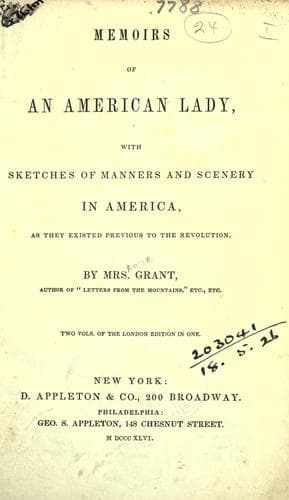
Memoirs of an American Lady: With Sketches of Manners and Scenery in America, as They Existed Previous to the RevolutionGrant, Anne MacVicar
History
Memoirs of an American Lady: With Sketches of Manners and Scenery in America, as They Existed Previous to the Revolution
Grant, Anne MacVicar
Indians of North America; New York (State) -- Social life and customs -- To 1775; Schuyler, Catalina, 1701-1778 or 1779
Indians have a great contempt, comparatively, for the beads we send
them, which they consider as only fit for those plebeians who cannot
by their exertions, win any better. They estimate them, compared with
their own wampum, as we do pearls compared with paste.
_Indian_—But the custom of my fathers.
_Trader_—You will not break the custom of your fathers by being thus
clad for a single year. They did not refuse those things which were
offered to them.
_Indian_—For this year, brother, I will exchange my skins; in the next,
I shall provide apparel more befitting a warrior. One pack alone I will
reserve, to dress for a future occasion. The summer must not find a
warrior idle.
The terms being adjusted, and the bargain concluded, the trader thus
shows his gratitude for liberal dealing.
_Trader_—Corlaer has forbid bringing scaura to steal away the wisdom of
the warriors; but we white men are weak and cold; we bring kegs for
ourselves, lest death arise from the swamps. We will not sell scaura,
but you shall taste some of ours in return for the venison with which
you have feasted us.
_Indian_—Brother, we will drink moderately.
A bottle was then given to the warrior, by way of present, which he was
advised to keep long, but found it irresistible. He soon returned with
the reserved pack of skins, earnestly urging the trader to give him
beads, silver brooches, and above all, scaura, to their full amount.
This, with much affected reluctance at parting with the private stock,
was at last yielded. The warriors now, after giving loose for a while to
frantic mirth, began the war-whoop, made the woods resound with
infuriated howlings; and having exhausted their dear-bought draught,
probably determined, in contempt of that probity, which at all other
times they rigidly observed, to plunder the instruments of their
pernicious gratification. He, well aware of the consequences, took care
to remove himself and his goods to some other place, and a renewal of
the same scene ensued. Where, all this time, were the women, whose
gentle counsels might have prevented these excesses? Alas! unrestrained
by that delicacy which is certainly one of the best fruits of
refinement, they shared in them, and sunk sooner under them. A long and
deep sleep generally succeeded, from which they awoke in a state of
dejection and chagrin, such as no Indian had ever experienced under any
other circumstances. They felt as Milton describes Adam and Eve to have
done after their transgression. Exhausted and forlorn, and stung with
the consciousness of error and dependence, they had neither the means
nor the desire of exercising their wonted summer occupations with
spirit. Vacancy produced languor, and languor made them wish for the
potion which gave temporary cheerfulness.[9] They carried their fish to
the next fort or habitation to barter for rum. This brought on days of
frenzy, succeeded by torpor. When again roused by want of exertion, they
Public-domain text, read in full here on John Shaqi.
Reviews
Reviews
No reviews yet
Be the first to share your thoughts on this work.
Elsewhere in the archive
Join the Discussion
Join the discussion
Sign in to leave a comment or review.
Sign InorCreate an account