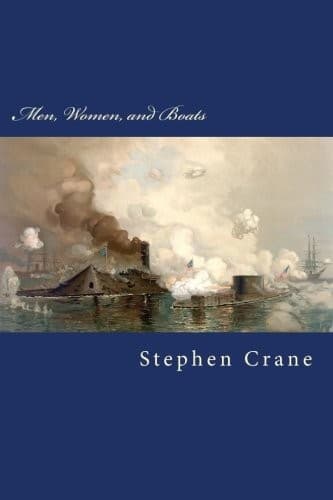
Short stories; United States -- Social life and customs -- 19th century -- Fiction
I have never been in the habit of reading signs. I don't like to read
signs. I have never met a man that liked to read signs. I once invented
a creature who could play the piano with a hammer, and I mentioned him
to a professor in Harvard University whose peculiarity was Sanscrit. He
had the same interest in my invention that I have in a certain kind of
mustard. And yet this mustard has become a part of me. Or, I have
become a part of this mustard. Further, I know more of an ink, a brand
of hams, a kind of cigarette, and a novelist than any man living. I
went by train to see a friend in the country, and after passing through
a patent mucilage, some more hams, a South African Investment Company,
a Parisian millinery firm, and a comic journal, I alighted at a new and
original kind of corset. On my return journey the road almost
continuously ran through soap.
I have accumulated superior information concerning these things,
because I am at their mercy. If I want to know where I am I must find
the definitive sign. This accounts for my glib use of the word
mucilage, as well as the titles of other staples.
I suppose even the Briton in mixing his life must sometimes consult the
labels on 'buses and streets and stations, even as the chemist consults
the labels on his bottles and boxes. A brave man would possibly affirm
that this was suggested by the existence of the labels.
The reason that I did not learn more about hams and mucilage in New
York seems to me to be partly due to the fact that the British
advertiser is allowed to exercise an unbridled strategy in his attack
with his new corset or whatever upon the defensive public. He knows
that the vulnerable point is the informatory sign which the citizen
must, of course, use for his guidance, and then, with horse, foot,
guns, corsets, hams, mucilage, investment companies, and all, he hurls
himself at the point.
Meanwhile I have discovered a way to make the Sanscrit scholar heed my
creature who plays the piano with a hammer.
THE SCOTCH EXPRESS
The entrance to Euston Station is of itself sufficiently imposing. It
is a high portico of brown stone, old and grim, in form a casual
imitation, no doubt, of the front of the temple of Nike Apteros, with a
recollection of the Egyptians proclaimed at the flanks. The frieze,
where of old would prance an exuberant processional of gods, is, in
this case, bare of decoration, but upon the epistyle is written in
simple, stern letters the word "EUSTON." The legend reared high by the
gloomy Pelagic columns stares down a wide avenue, In short, this
entrance to a railway station does not in any way resemble the entrance
to a railway station. It is more the front of some venerable bank. But
it has another dignity, which is not born of form. To a great degree,
it is to the English and to those who are in England the gate to
Scotland.
Public-domain text, read in full here on John Shaqi.
Reviews
Reviews
No reviews yet
Be the first to share your thoughts on this work.
Elsewhere in the archive
Join the Discussion
Join the discussion
Sign in to leave a comment or review.
Sign InorCreate an account