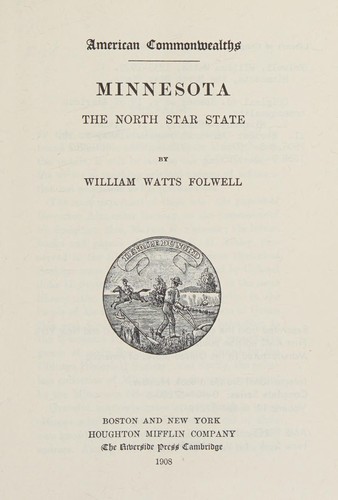
Minnesota, the North Star StateFolwell, William Watts
History
Minnesota, the North Star State
Folwell, William Watts
Minnesota -- History
Senator Ramsey’s second term was expiring in March, 1875, and it was no
secret that he desired and expected a reëlection. Mr. Davis was an
avowed aspirant, but there were other gentlemen who did not intend that
the choice should fall to him in case of Mr. Ramsey’s rejection. The
Republican caucus met on January 14, 1875. Mr. Ramsey’s friends were
far in the lead, and on the last vote of the session lacked but two
votes to nominate. Confident of success, they consented to an
adjournment demanded by the “field.” The field had but one desire in
common, to get Senator Ramsey out of their daylight. On reassembling
the following night one third of the members were absent or did not
vote. The two votes lacking to Mr. Ramsey on the previous evening
appeared, and he was formally nominated. But the vote did not compel
the unanimous support of the Republican members. On the separate voting
in the two houses on January 19, Mr. Ramsey had 60 votes, 74 being
necessary to elect. On the 20th the houses met in joint convention and
proceeded to ballot. Mr. Ramsey received 61 votes, his maximum. Davis
received 24, and at no time any greater number. Mr. Donnelly, the
nominee of the Democrats and “Greeleyized Republicans,” had 51 votes.
The balloting now proceeded from day to day, on most days but one being
had. On the 27th Mr. Donnelly withdrew, alleging that Democratic
members failed to give him the support he was entitled to as a regular
nominee. Hon. William Lochren, a Civil War veteran highly respected for
personal character and legal ability, was put in his place and
commanded the full strength of the opposition, sixty-four votes. On
February 13, after seventeen ballots, Ramsey and Davis were withdrawn,
but it was not till the 19th that the eighty-two Republican votes could
be concentrated on the Hon. S. J. R. McMillan of St. Paul, a highly
respected citizen and a judge of the supreme court. His career in the
national Senate, by no means brilliant, was characterized by such
diligence, good sense, and party fidelity that there was no notable
opposition to his reëlection six years later. Mr. Davis did not seek
reëlection as governor, but resumed his law practice, and not long
after published an ingenious essay on “The Law in Shakespeare.”
The ambition of certain young men, who could well afford to wait, and
who did wait for promotion, lost to the state and nation the services
of a wise and experienced legislator. President Hayes called Mr. Ramsey
into his cabinet as secretary of war, and temporarily devolved on him
the duties of secretary of the navy. Retiring from public life, he
continued for nearly a quarter of a century to enjoy the esteem and
gratitude of citizens of all parties and persuasions. For many years he
presided over the Minnesota Historical Society and its executive
council. He died April 22, 1902.
Public-domain text, read in full here on John Shaqi.
Reviews
Reviews
No reviews yet
Be the first to share your thoughts on this work.
Elsewhere in the archive
Join the Discussion
Join the discussion
Sign in to leave a comment or review.
Sign InorCreate an account