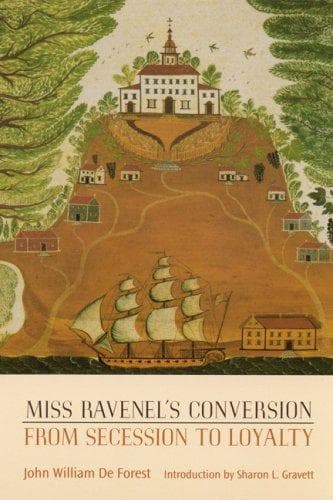
Miss Ravenel's conversion from secession to loyaltyDe Forest, John William
History
Miss Ravenel's conversion from secession to loyalty
De Forest, John William
Historical fiction; United States -- History -- Civil War, 1861-1865 -- Fiction; War stories; Women -- United States -- Fiction
"My dear, there are so many negroes in there that I can't get in."
"Then come up and talk to me," commanded the young lady, who had meant
that all the while. "You needn't think you can find any Smithites or
Robinsonites. There isn't a mineral in Louisiana, unless it is a
brickbat. Do come up here and talk to me. I can't scream to you all the
afternoon."
"I am so glad you can't," grinned papa, and strolled obstinately away in
the direction of the sugar-house. He was studying the nature of the
soil, and proposing to subject it to a chemical analysis, in order to
see if it could not be made to produce as much corn to the acre as the
bottom lands of Ohio. Indian corn and sweet potatoes, with a little
seasoning of onions, beets, squashes, and other kitchen garden
vegetables, should be his only crop that season. Also he would raise
pigs and chickens by the hundred, and perhaps three or four cows, if
promising calves could be obtained in the country. What New Orleans
wanted, and what the whole department would stand in desperate need of,
should a war break out with France, was, not sugar, but corn and pork.
All that summer the possibility of a war with France was a prominent
topic of conversation in Louisiana, so that even the soldiers talked in
their rough way of "revelling in the halls of the Montezumas, and
filling their pockets with little gold Jesuses." As for making sugar,
unless it might be a hogshead or so for family consumption, it was out
of the question. It would cost twenty thousand dollars merely to put the
sugar-house and its machinery to rights--and the Doctor had no such
riches, nor any thing approaching to it, this side of heaven.
Nevertheless he was perfectly happy in strolling about his unplanted
estate, and revolving his unfulfilled plans, agricultural and
humanitarian. He proposed to produce, not only a crop of corn and
potatoes, but a race of intelligent, industrious and virtuous laborers.
He would make himself analytically acquainted, not only with the
elements and possibilities of the soil, but with those of the negro
soul. By the way, I ought to mention that he was not proprietor of the
plantation, but only a tenant of it to the United States, paying a rent
which for the first year was merely nominal, so anxious was Authority to
initiate successfully the grand experiment of freedmen's labor.
When he returned to the house from a stroll of two hours Lillie favored
him with a good imitation of a sound scolding. What did he mean by
leaving her alone so, without anybody to speak a word to? If he was
going to be always out in this way, they might as well live in New
Orleans where he would be fussing around his hospital from morning till
night. She was tired with overseeing those stupid negroes and trying to
make them set the chairs and tables right side up.
Public-domain text, read in full here on John Shaqi.
Reviews
Reviews
No reviews yet
Be the first to share your thoughts on this work.
Elsewhere in the archive
Join the Discussion
Join the discussion
Sign in to leave a comment or review.
Sign InorCreate an account