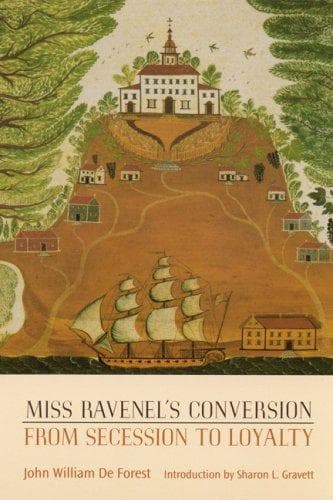
Miss Ravenel's conversion from secession to loyaltyDe Forest, John William
History
Miss Ravenel's conversion from secession to loyalty
De Forest, John William
Historical fiction; United States -- History -- Civil War, 1861-1865 -- Fiction; War stories; Women -- United States -- Fiction
In another part of the letter he says, "The forts have surrendered, and
we are steaming up the Mississippi in the track of that amazing
Farragut. As I look around me with what knowledge of science there is in
my eyes, I feel as if I had lived a few millions of years since
yesterday; for within twenty-four hours we have sailed out of the
marsupial period into the comparatively modern era of fluvial deposits
and luxuriant vegetation. Give my compliments to Miss Ravenel, and tell
her that I modify my criticisms on the scenery of Louisiana. On either
side the land is a living emerald. The plantation houses are embowered
in orange groves--in a glossy mass of brilliant, fragrant verdure. I do
not know the names of a quarter of the plants and trees which I see; but
I pass the livelong day in admiring and almost adoring their tropical
beauty. We are no welcome tourists, at least not to the white
inhabitants; very few of them show themselves, and they do not answer
our cheering, nor hardly look at us; they walk or ride grimly by, with
faces set straight forward, as if they could thereby ignore our
existence. But to the negroes we evidently appear as friends and
redeemers. Such joyous gatherings of dark faces, such deep-chested
shouts of welcome and deliverance, such a waving of green boughs and
white vestments, and even of pickaninnies--such a bending of knees and
visible praising of God for his long-expected and at last realized
mercy, salutes our eyes from morn till night, as makes me grateful to
Heaven for this hour of holy triumph. How glorious will be that time,
now near at hand, when our re-united country will be free of the shame
and curse of slavery!"
Miss Ravenel spit in her angry pussy-cat fashion when her father read to
her this passage of the letter.
"We are in New Orleans," proceeds Colburne towards the close of this
prodigious epistle. "Our regiment was the first to reach the city and to
witness the bareness of the once-crowded wharves, the desertion of the
streets and the sullen spite of the few remaining inhabitants. I suspect
that your aristocratic acquaintances have all fled at the approach of
the Vandal Yankees, for I see only negroes, poor foreigners, and rowdies
more savage-looking than the tribes of the Bowery. The spirit of
impotent but impertinent hate in this population is astonishing. The
ragged news-boys will not sell us a paper--the beggarly restaurants will
not furnish us a dinner. Wherever I walk I am saluted by mutterings of
'Damned Yankee!'--'Cut his heart out!' &c. &c. I once more profess
allegiance to your theory that this is where Satan's seat is. But the
evil spirits who inhabit this city of desolation only grimace and
mumble, without attempting any manner of injury. If Miss Ravenel fears
that there will be a popular insurrection and a consequent burning of
the city, assure her from me that she may dismiss all such terrors."
Public-domain text, read in full here on John Shaqi.
Reviews
Reviews
No reviews yet
Be the first to share your thoughts on this work.
Elsewhere in the archive
Join the Discussion
Join the discussion
Sign in to leave a comment or review.
Sign InorCreate an account