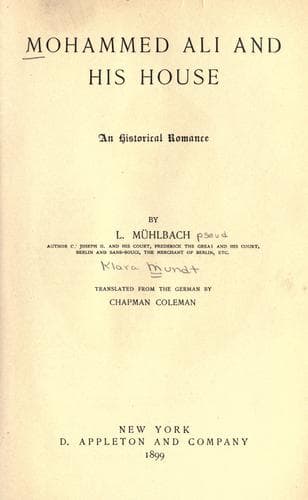
Egypt -- History -- Mohammed Ali, 1805-1849 -- Fiction; Muhammad Ali Basha, Governor of Egypt, 1769-1849 -- Fiction
It was a splendid spectacle, the wide plain with its array of gayly-
decorated tents, with its great squares, on which the Mamelukes
mounted on their proud steeds, displayed their skill with the spear
and the gun, exciting the admiration of the Turks by their skill and
agility.
All was festivity, and life was enjoyed as though it were an
uninterrupted chain of pleasures. Yet there were some who felt less
contented than these Mameluke beys, some who had learned from the
French that promises and assurances of friendship were not always to
be relied on.
Many of the beys had brought their wives with them, for the wives of
the beys enjoyed greater liberty than those of the Turks, and they
could move about among the tents, with as little constraint as in
the streets of Cairo. The Mameluke honors his bey's wife, and bows
down in the dust before her, when she passes by with head erect and
veiled countenance, followed by her slaves.
On this, the fourteenth day of their sojourn at Aboukir, the
Mamelukes also bow profoundly before a woman who, followed by two
servants, is passing down between the double row of tents, and
whisper to each other: "This is the wife of our greatest chieftain,
the deceased Mourad Bey! How does it happen that she has left her
beautiful palace in Cairo? For what purpose has Sitta Nefysseh come
to Aboukir?"
And when she had passed, the Mamelukes raised their heads and
followed with their eyes the white form as it swept on between the
tents, and observed with astonishment that Mourad Bey's widow had
stopped at the tent of the bey who was now their first chief, at the
tent of Osman Bey Bardissi. Mourad's widow, and those who
accompanied her, entered this tent.
He lay on the divan, smoking his chibouque. But upon her appearance
at the entrance to the tent, he sprang to his feet.
"You here, Sitta-you in the camp at Aboukir?"
"I have come to speak with you," she replied, earnestly.--"Let the
rest leave the tent. Mourad's widow can be alone with the man whom
her deceased husband called his dear friend."
He waved his hand imperiously, and all the servants with drew from
the tent, closing the gold-embroidered curtains behind them.
"Speak!" said the bey, in deferential tones. "Your servant hears,
and is ready to obey your commands."
"I have not come to command," replied she; "I have come to warn you,
Osman."
"To warn me, Sitta?"
Public-domain text, read in full here on John Shaqi.
Reviews
Reviews
No reviews yet
Be the first to share your thoughts on this work.
Elsewhere in the archive
Join the Discussion
Join the discussion
Sign in to leave a comment or review.
Sign InorCreate an account