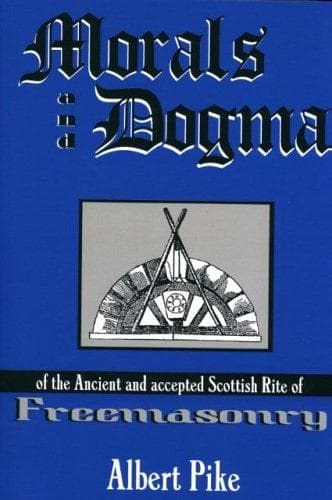
Morals and Dogma of the Ancient and Accepted Scottish Rite of FreemasonryPike, Albert
Religion
Morals and Dogma of the Ancient and Accepted Scottish Rite of Freemasonry
Pike, Albert
Freemasons
It is our duty to obey the laws of our country, and to be careful that
prejudice or passion, fancy or affection, error and illusion, be not
mistaken for conscience. Nothing is more usual than to pretend
conscience in all the actions of man which are public and cannot be
concealed. The disobedient refuse to submit to the laws, and they also
in many cases pretend conscience; and so disobedience and rebellion
become conscience, in which there is neither knowledge nor revelation,
nor truth nor charity, nor reason nor religion. Conscience is tied to
laws. Right or sure conscience is right reason reduced to practice, and
conducting moral actions, while perverse conscience is seated in the
fancy or affections--a heap of irregular principles and irregular
defects--and is the same in conscience as deformity is in the body, or
peevishness in the affections. It is not enough that the conscience be
taught by nature; but it must be taught by God, conducted by reason,
made operative by discourse, assisted by choice, instructed by laws and
sober principles; and then it _is_ right, and it _may_ be sure. All the
general measures of justice, are the laws of God, and therefore they
constitute the general rules of government for the conscience; but
necessity also hath a large voice in the arrangement of human affairs,
and the disposal of human relations, and the dispositions of human laws;
and these general measures, like a great river into little streams, are
deduced into little rivulets and particularities, by the laws and
customs, by the sentences and agreements of men, and by the absolute
despotism of necessity, that will not allow perfect and abstract justice
and equity to be the sole rule of civil government in an imperfect
world; and that must needs be law which is for the greatest good of the
greatest number.
When thou vowest a vow unto God, defer not to pay it. It is better thou
shouldest not vow than thou shouldest vow and not pay. Be not rash with
thy mouth, and let not thine heart be hasty to utter anything before
God: for God is in Heaven, and thou art upon earth; therefore let thy
words be few. Weigh well what it is you promise; but once the promise
and pledge are given remember that he who is false to his obligation
will be false to his family, his friends, his country, and his God.
Public-domain text, read in full here on John Shaqi.
Reviews
Reviews
No reviews yet
Be the first to share your thoughts on this work.
Elsewhere in the archive
Join the Discussion
Join the discussion
Sign in to leave a comment or review.
Sign InorCreate an account