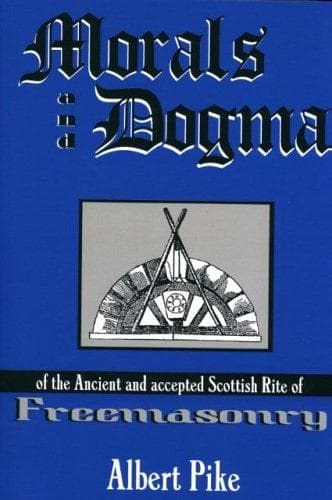
Morals and Dogma of the Ancient and Accepted Scottish Rite of FreemasonryPike, Albert
Religion
Morals and Dogma of the Ancient and Accepted Scottish Rite of Freemasonry
Pike, Albert
Freemasons
God hath appointed one remedy for all the evils in the world; and that
is a contented spirit. We may be reconciled to poverty and a low
fortune, if we suffer contentedness and equanimity to make the
proportions. No man is poor who doth not think himself so; but if, in a
full fortune, with impatience he desires more, he proclaims his wants
and his beggarly condition. This virtue of contentedness was the sum of
all the old moral philosophy, and is of most universal use in the whole
course of our lives, and the only instrument to ease the burdens of the
world and the enmities of sad chances. It is the great reasonableness of
complying with the Divine Providence, which governs all the world, and
hath so ordered us in the administration of His great family. It is fit
that God should dispense His gifts as He pleases; and if we murmur here,
we may, at the next melancholy, be troubled that He did not make us to
be angels or stars.
We ourselves make our fortunes good or bad; and when God lets loose a
Tyrant upon us, or a sickness, or scorn, or a lessened fortune, if we
fear to die, or know not how to be patient, or are proud, or covetous,
then the calamity sits heavy on us. But if we know how to manage a noble
principle, and fear not death so much as a dishonest action, and think
impatience a worse evil than a fever, and pride to be the greatest
disgrace as well as the greatest folly, and poverty far preferable to
the torments of avarice, we may still bear an even mind and smile at the
reverses of fortune and the ill-nature of Fate.
If thou hast lost thy land, do not also lose thy constancy; and if thou
must die sooner than others, or than thou didst expect, yet do not die
impatiently. For no chance is evil to him who is content, and to a man
nothing is miserable unless it be unreasonable. No man can make another
man to be his slave, unless that other hath first enslaved himself to
life and death, to pleasure or pain, to hope or fear; command these
passions, and you are freer than the Parthian Kings.
When an enemy reproaches us, let us look on him as an impartial relator
of our faults; for he will tell us truer than our fondest friend will,
and we may forgive his anger, whilst we make use of the plainness of his
declamation. The ox, when he is weary, treads truest; and if there be
nothing else in abuse, but that it makes us to walk warily, and tread
sure for fear of our enemies, that is better than to be flattered into
pride and carelessness.
Public-domain text, read in full here on John Shaqi.
Reviews
Reviews
No reviews yet
Be the first to share your thoughts on this work.
Elsewhere in the archive
Join the Discussion
Join the discussion
Sign in to leave a comment or review.
Sign InorCreate an account