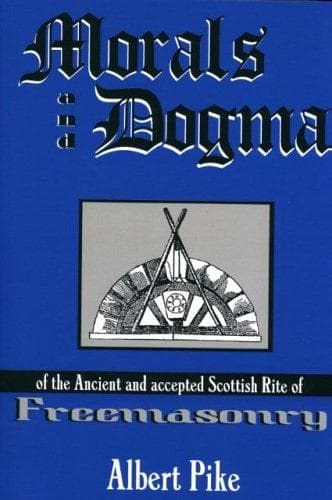
Morals and Dogma of the Ancient and Accepted Scottish Rite of FreemasonryPike, Albert
Religion
Morals and Dogma of the Ancient and Accepted Scottish Rite of Freemasonry
Pike, Albert
Freemasons
Measure your desires by your fortune and condition, not your fortunes by
your desires: be governed by your needs, not by your fancy; by nature,
not by evil customs and ambitious principles. It is no evil to be poor,
but to be vicious and impatient. Is that beast better, that hath two or
three mountains to graze on, than the little bee that feeds on dew or
manna, and lives upon what falls every morning from the store-houses of
Heaven, clouds and Providence?
There are some instances of fortune and a fair condition that cannot
stand with some others; but if you desire this, you must lose that, and
unless you be content with one, you lose the comfort of both. If you
covet learning, you must have leisure and a retired life; if honors of
State and political distinctions, you must be ever abroad in public, and
get experience, and do all men's business, and keep all company, and
have no leisure at all. If you will be rich, you must be frugal; if you
will be popular, you must be bountiful; if a philosopher, you must
despise riches. If you would be famous as Epaminondas, accept also his
poverty, for it added lustre to his person, and envy to his fortune, and
his virtue without it could not have been so excellent. If you would
have the reputation of a martyr, you must needs accept his persecution;
if of a benefactor of the world, the world's injustice; if truly great,
you must expect to see the mob prefer lesser men to yourself.
God esteems it one of His glories, that He brings good out of evil; and
therefore it were but reason we should trust Him to govern His own world
as He pleases; and that we should patiently wait until the change
cometh, or the reason is discovered.
A Mason's contentedness must by no means be a mere contented
selfishness, like his who, comfortable himself, is indifferent to the
discomfort of others. There will always be in this world wrongs to
forgive, suffering to alleviate, sorrow asking for sympathy, necessities
and destitution to relieve, and ample occasion for the exercise of
active charity and beneficence. And he who sits unconcerned amidst it
all, perhaps enjoying his own comforts and luxuries the more, by
contrasting them with the hungry and ragged destitution and shivering
misery of his fellows, is not contented, but selfish and unfeeling.
It is the saddest of all sights upon this earth, that of a man lazy and
luxurious, or hard and penurious, to whom want appeals in vain, and
suffering cries in an unknown tongue. The man whose hasty anger hurries
him into violence and crime is not half so unworthy to live. He is the
faithless steward, that embezzles what God has given him in trust for
the impoverished and suffering among his brethren. The true Mason must
be and must have a right to be content with himself; and he can be so
only when he lives not for himself alone, but for others also, who need
his assistance and have a claim upon his sympathy.
Public-domain text, read in full here on John Shaqi.
Reviews
Reviews
No reviews yet
Be the first to share your thoughts on this work.
Elsewhere in the archive
Join the Discussion
Join the discussion
Sign in to leave a comment or review.
Sign InorCreate an account