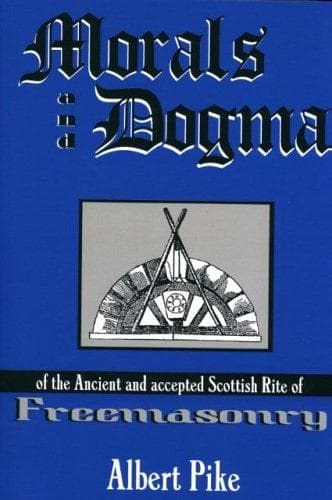
Morals and Dogma of the Ancient and Accepted Scottish Rite of FreemasonryPike, Albert
Religion
Morals and Dogma of the Ancient and Accepted Scottish Rite of Freemasonry
Pike, Albert
Freemasons
Masonry is not "speculative," nor theoretical, but experimental; not
sentimental, but practical. It requires self-renunciation and
self-control. It wears a stern face toward men's vices, and interferes
with many of our pursuits and our fancied pleasures. It penetrates
beyond the region of vague sentiment; beyond the regions where
moralizers and philosophers have woven their fine theories and
elaborated their beautiful maxims, to the very depths of the heart,
rebuking our littlenesses and meannesses, arraigning our prejudices and
passions, and warring against the armies of our vices.
It wars against the passions that spring out of the bosom of a world of
fine sentiments, a world of admirable sayings and foul practices, of
good maxims and bad deeds; whose darker passions are not only restrained
by custom and ceremony, but hidden even from itself by a veil of
beautiful sentiments. This terrible solecism has existed in all ages.
Romish sentimentalism has often covered infidelity and vice; Protestant
straightness often lauds spirituality and faith, and neglects homely
truth, candor, and generosity; and ultra-liberal Rationalistic
refinement sometimes soars to heaven in its dreams, and wallows in the
mire of earth in its deeds.
There may be a world of Masonic sentiment; and yet a world of little or
no Masonry. In many minds there is a vague and general sentiment of
Masonic charity, generosity, and disinterestedness, but no practical,
active virtue, nor habitual kindness, self-sacrifice, or liberality.
Masonry plays about them like the cold though brilliant lights that
flush and eddy over Northern skies. There are occasional flashes of
generous and manly feeling, transitory splendors, and momentary gleams
of just and noble thought, and transient coruscations, that light the
Heaven of their imagination; but there is no vital warmth in the heart;
and it remains as cold and sterile as the Arctic or Antarctic regions.
They _do_ nothing; they gain no victories over themselves; they make no
progress; they are still in the Northeast corner of the Lodge, as when
they first stood there as Apprentices; and they do not cultivate
Masonry, with a cultivation, determined, resolute, and regular, like
their cultivation of their estate, profession, or knowledge. Their
Masonry takes its chance in general and inefficient sentiment,
mournfully barren of results; in words and formulas and fine
professions.
Most men have _sentiments_, but not _principles_. The former are
temporary sensations, the latter permanent and controlling impressions
of goodness and virtue. The former are general and involuntary, and do
not rise to the character of virtue. Every one feels them. They flash up
spontaneously in every heart. The latter are rules of action, and shape
and control our conduct; and it is these that Masonry insists upon.
Public-domain text, read in full here on John Shaqi.
Reviews
Reviews
No reviews yet
Be the first to share your thoughts on this work.
Elsewhere in the archive
Join the Discussion
Join the discussion
Sign in to leave a comment or review.
Sign InorCreate an account