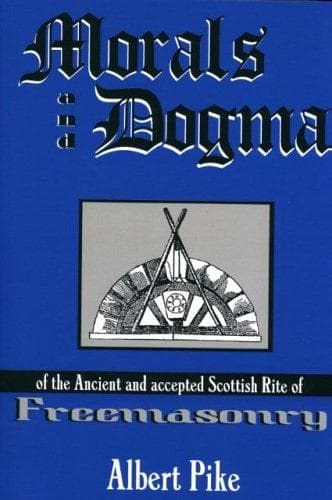
Morals and Dogma of the Ancient and Accepted Scottish Rite of FreemasonryPike, Albert
Religion
Morals and Dogma of the Ancient and Accepted Scottish Rite of Freemasonry
Pike, Albert
Freemasons
The wise and well-informed Mason will not fail to be the votary of
Liberty and Justice. He will be ready to exert himself in their defence,
wherever they exist. It cannot be a matter of indifference to him when
his own liberty and that of other men, with whose merits and capacities
he is acquainted, are involved in the event of the struggle to be made;
but his attachment will be to the cause, as the cause of man; and not
merely to the country. Wherever there is a people that understands the
value of political justice, and is prepared to assert it, that is his
country; wherever he can most contribute to the diffusion of these
principles and the real happiness of mankind, that is his country. Nor
does he desire for any country any other benefit than justice.
The true Mason identifies the honor of his country with his own. Nothing
more conduces to the beauty and glory of one's country than the
preservation against all enemies of its civil and religious liberty. The
world will never willingly let die the names of those patriots who in
her different ages have received upon their own breasts the blows aimed
by insolent enemies at the bosom of their country.
But also it conduces, and in no small measure, to the beauty and glory
of one's country, that justice should always be administered there to
all alike, and neither denied, sold, nor delayed to any one; that the
interest of the poor should be looked to, and none starve or be
houseless, or clamor in vain for work; that the child and the feeble
woman should not be overworked, or even the apprentice or slave be
stinted of food or overtasked or mercilessly scourged; and that God's
great laws of mercy, humanity, and compassion should be everywhere
enforced, not only by the statutes, but also by the power of public
opinion. And he who labors, often against reproach and obloquy, and
oftener against indifference and apathy, to bring about that fortunate
condition of things when that great code of divine law shall be
everywhere and punctually obeyed, is no less a patriot than he who bares
his bosom to the hostile steel in the ranks of his country's soldiery.
For fortitude is not only seen resplendent on the field of battle and
amid the clash of arms, but he displays its energy under every
difficulty and against every assailant. He who wars against cruelty,
oppression, and hoary abuses, fights for his country's honor, which
these things soil; and her honor is as important as her existence.
Often, indeed, the warfare against those abuses which disgrace one's
country is quite as hazardous and more discouraging than that against
her enemies in the field; and merits equal, if not greater reward.
Public-domain text, read in full here on John Shaqi.
Reviews
Reviews
No reviews yet
Be the first to share your thoughts on this work.
Elsewhere in the archive
Join the Discussion
Join the discussion
Sign in to leave a comment or review.
Sign InorCreate an account