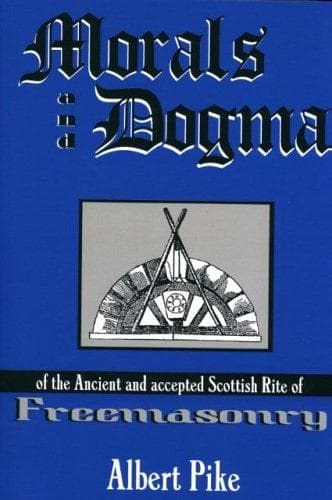
Morals and Dogma of the Ancient and Accepted Scottish Rite of FreemasonryPike, Albert
Religion
Morals and Dogma of the Ancient and Accepted Scottish Rite of Freemasonry
Pike, Albert
Freemasons
The duties of a Prince Ameth are, to be earnest, true, reliable, and
sincere; to protect the people against illegal impositions and
exactions; to contend for their political rights, and to see, as far as
he may or can, that those bear the burdens who reap the benefits of the
Government.
You are to be true unto all men.
You are to be frank and sincere in all things.
You are to be earnest in doing whatever it is your duty to do.
And no man must repent that he has relied upon your resolve, your
profession, or your word.
The great distinguishing characteristic of a Mason is sympathy with his
kind. He recognizes in the human race one great family, all connected
with himself by those invisible links, and that mighty net-work of
circumstance, forged and woven by God.
Feeling that sympathy, it is his first Masonic duty to serve his
fellow-man. At his first entrance into the Order, he ceases to be
isolated, and becomes one of a great brotherhood, assuming new duties
toward every Mason that lives, as every Mason at the same moment assumes
them toward him.
Nor are those duties on his part confined to Masons alone. He assumes
many in regard to his country, and especially toward the great,
suffering masses of the common people; for they too are his brethren,
and God hears them, inarticulate as the moanings of their misery are. By
all proper means, of persuasion and influence, and otherwise, if the
occasion and emergency require, he is bound to defend them against
oppression, and tyrannical and illegal exactions.
He labors equally to defend and to improve the people. He does not
flatter them to mislead them, nor fawn upon them to rule them, nor
conceal his opinions to humor them, nor tell them that they can never
err, and that their voice is the voice of God. He knows that the safety
of every free government, and its continuance and perpetuity depend upon
the virtue and intelligence of the common people; and that, unless their
liberty is of such a kind as arms can neither procure nor take away;
unless it is the fruit of manly courage, of justice, temperance, and
generous virtue--unless, being such, it has taken deep root in the minds
and hearts of the people at large, there will not long be wanting those
who will snatch from them by treachery what they have acquired by arms
or institutions.
Public-domain text, read in full here on John Shaqi.
Reviews
Reviews
No reviews yet
Be the first to share your thoughts on this work.
Elsewhere in the archive
Join the Discussion
Join the discussion
Sign in to leave a comment or review.
Sign InorCreate an account