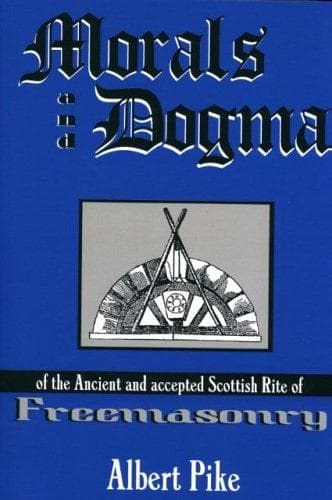
Morals and Dogma of the Ancient and Accepted Scottish Rite of FreemasonryPike, Albert
Religion
Morals and Dogma of the Ancient and Accepted Scottish Rite of Freemasonry
Pike, Albert
Freemasons
Unfortunately, every age presents its own special problem, most
difficult and often impossible to solve; and that which this age offers,
and forces upon the consideration of all thinking men, is this--how, in
a populous and wealthy country, blessed with free institutions and a
constitutional government, are the great masses of the manual-labor
class to be enabled to have steady work at fair wages, to be kept from
starvation, and their children from vice and debauchery, and to be
furnished with that degree, not of mere reading and writing, but of
_knowledge_, that shall fit them intelligently to do the duties and
exercise the privileges of freemen; even to be intrusted with the
dangerous right of suffrage?
For though we do not know why God, being infinitely merciful as well as
wise, has so ordered it, it seems to be unquestionably his law, that
even in civilized and Christian countries, the large mass of the
population shall be fortunate, if, during their whole life, from infancy
to old age, in health and sickness, they have enough of the commonest
and coarsest food to keep themselves and their children from the
continual gnawing of hunger--enough of the commonest and coarsest
clothing to protect themselves and their little ones from indecent
exposure and the bitter cold; and if they have over their heads the
rudest shelter.
And He seems to have enacted this law--which no human community has yet
found the means to abrogate--that when a country becomes populous,
capital shall concentrate in the hands of a limited number of persons,
and labor become more and more at its mercy, until mere manual labor,
that of the weaver and ironworker, and other artisans, eventually ceases
to be worth more than a bare subsistence, and often, in great cities and
vast extents of country, not even that, and goes or crawls about in
rags, begging, and starving for want of work.
While every ox and horse can find work, and is worth being fed, it is
not always so with man. To be employed, to have a chance to work at
anything like fair wages, becomes the great engrossing object of a man's
life. The capitalist can live without employing the laborer, and
discharges him whenever that labor ceases to be profitable. At the
moment when the weather is most inclement, provisions dearest, and rents
highest, he turns him off to starve. If the day-laborer is taken sick,
his wages stop. When old, he has no pension to retire upon. His children
cannot be sent to school; for before their bones are hardened they must
get to work lest they starve. The man, strong and able-bodied, works for
a shilling or two a day, and the woman shivering over her little pan of
coals, when the mercury drops far below zero, after her hungry children
have wailed themselves to sleep, sews by the dim light of her lonely
candle, for a bare pittance, selling her life to him who bargained only
for the work of her needle.
Public-domain text, read in full here on John Shaqi.
Reviews
Reviews
No reviews yet
Be the first to share your thoughts on this work.
Elsewhere in the archive
Join the Discussion
Join the discussion
Sign in to leave a comment or review.
Sign InorCreate an account