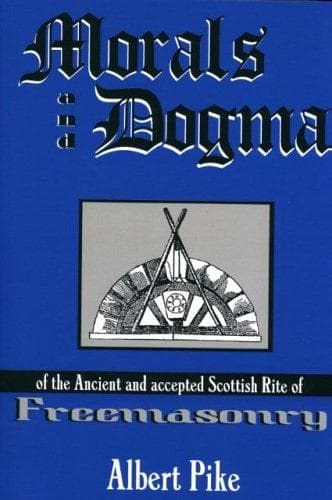
Morals and Dogma of the Ancient and Accepted Scottish Rite of FreemasonryPike, Albert
Religion
Morals and Dogma of the Ancient and Accepted Scottish Rite of Freemasonry
Pike, Albert
Freemasons
For no tower of Pride was ever yet high enough to lift its possessor
above the trials and fears and frailities of humanity. No human hand
ever built the wall, nor ever shall, that will keep out affliction,
pain, and infirmity. Sickness and sorrow, trouble and death, are
dispensations that level everything. They know none, high nor low. The
chief wants of life, the great and grave necessities of the human soul,
give exemption to none. They make all poor, all weak. They put
supplication in the mouth of every human being, as truly as in that of
the meanest beggar.
But the principle of misery is not an evil principle. We err, and the
consequences teach us wisdom. All elements, all the laws of things
around us, minister to this end; and through the paths of painful error
and mistake, it is the design of Providence to lead us to truth and
happiness. If erring only taught us to err; if mistakes confirmed us in
imprudence; if the miseries caused by vicious indulgence had a natural
tendency to make us more abject slaves of vice, then suffering would be
wholly evil. But, on the contrary, all tends and is designed to produce
amendment and improvement. Suffering is the discipline of virtue; of
that which is infinitely better than happiness, and yet embraces in
itself all essential happiness. It nourishes, invigorates, and perfects
it. Virtue is the prize of the severely-contested race and hard-fought
battle; and it is worth all the fatigue and wounds of the conflict. Man
should go forth with a brave and strong heart, to battle with calamity.
He is to master it, and not let it become _his_ master. He is not to
forsake the post of trial and of peril; but to stand firmly in his lot,
until the great word of Providence shall bid him fly, or bid him sink.
With resolution and courage the Mason is to do the work which it is
appointed for him to do, looking through the dark cloud of human
calamity, to the end that rises high and bright before him. The lot of
sorrow is great and sublime. None suffer forever, nor for nought, nor
without purpose. It is the ordinance of God's wisdom, and of His
Infinite Love, to procure for us infinite happiness and glory.
Virtue is the truest liberty; nor is he free who stoops to passions; nor
he in bondage who serves a noble master. Examples are the best and most
lasting lectures; virtue the best example. He that hath done good deeds
and set good precedents, in sincerity, is happy. Time shall not outlive
his worth. He lives truly after death, whose good deeds are his pillars
of remembrance; and no day but adds some grains to his heap of glory.
Good works are seeds, that after sowing return us a continual harvest;
and the memory of noble actions is more enduring than monuments of
marble.
Public-domain text, read in full here on John Shaqi.
Reviews
Reviews
No reviews yet
Be the first to share your thoughts on this work.
Elsewhere in the archive
Join the Discussion
Join the discussion
Sign in to leave a comment or review.
Sign InorCreate an account