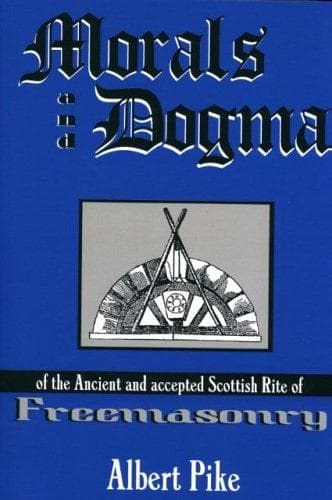
Morals and Dogma of the Ancient and Accepted Scottish Rite of FreemasonryPike, Albert
Religion
Morals and Dogma of the Ancient and Accepted Scottish Rite of Freemasonry
Pike, Albert
Freemasons
Everywhere in the world labor is, in some shape, the slave of capital;
generally, a slave to be fed only so long as he can work; or, rather,
only so long as his work is profitable to the owner of the human
chattel. There are famines in Ireland, strikes and starvation in
England, pauperism and tenement-dens in New York, misery, squalor,
ignorance, destitution, the brutality of vice and the insensibility to
shame, of despairing beggary, in all the human cesspools and sewers
everywhere. Here, a sewing-woman famishes and freezes; there, mothers
murder their children, that those spared may live upon the bread
purchased with the burial allowances of the dead starveling; and at the
next door young girls prostitute themselves for food.
Moreover, the Voice says, this besotted race is not satisfied with
seeing its multitudes swept away by the great epidemics whose causes are
unknown, and of the justice or wisdom of which the human mind cannot
conceive. It must also be ever at war. There has not been a moment since
men divided into Tribes, when all the world was at peace. Always men
have been engaged in murdering each other somewhere. Always the armies
have lived by the toil of the husbandman, and war has exhausted the
resources, wasted the energies, and ended the prosperity of Nations. Now
it loads unborn posterity with crushing debt, mortgages all estates, and
brings upon States the shame and infamy of dishonest repudiation.
At times, the baleful fires of war light up half a Continent at once; as
when all the Thrones unite to compel a people to receive again a hated
and detestable dynasty, or States deny States the right to dissolve an
irksome union and create for themselves a separate government. Then
again the flames flicker and die away, and the fire smoulders in its
ashes, to break out again, after a time, with renewed and a more
concentrated fury. At times, the storm, revolving, howls over small
areas only; at times its lights are seen, like the old beacon-fires on
the hills, belting the whole globe. No sea, but hears the roar of
cannon; no river, but runs red with blood; no plain, but shakes,
trampled by the hoofs of charging squadrons; no field, but is fertilized
by the blood of the dead; and everywhere man slays, the vulture gorges,
and the wolf howls in the ear of the dying soldier. No city is not
tortured by shot and shell; and no people fail to enact the horrid
blasphemy of thanking a God of Love for victories and carnage. Te Deums
are still sung for the Eve of St. Bartholomew and the Sicilian Vespers.
Man's ingenuity is racked, and all his inventive powers are tasked, to
fabricate the infernal enginery of destruction, by which human bodies
may be the more expeditiously and effectually crushed, shattered, torn,
and mangled; and yet hypocritical[1] Humanity, drunk with blood and
drenched with gore, shrieks to Heaven at a single murder, perpetrated to
gratify a revenge not more unchristian, or to satisfy a cupidity not
Public-domain text, read in full here on John Shaqi.
Reviews
Reviews
No reviews yet
Be the first to share your thoughts on this work.
Elsewhere in the archive
Join the Discussion
Join the discussion
Sign in to leave a comment or review.
Sign InorCreate an account