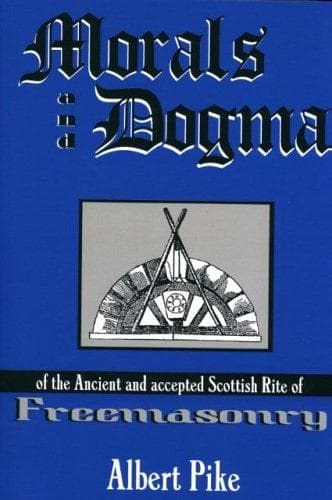
Morals and Dogma of the Ancient and Accepted Scottish Rite of FreemasonryPike, Albert
Religion
Morals and Dogma of the Ancient and Accepted Scottish Rite of Freemasonry
Pike, Albert
Freemasons
The true Mason labors for the benefit of those who are to come after
him, and for the advancement and improvement of his race. That is a poor
ambition which contents itself within the limits of a single life. All
men who deserve to live, desire to survive their funerals, and to live
afterward in the good that they have done mankind, rather than in the
fading characters written in men's memories. Most men desire to leave
some work behind them that may outlast their own day and brief
generation. That is an instinctive impulse, given by God, and often
found in the rudest human heart; the surest proof of the soul's
immortality, and of the fundamental difference between man and the
wisest brutes. To plant the trees that, after we are dead, shall shelter
our children, is as natural as to love the shade of those our fathers
planted. The rudest unlettered husbandman, painfully conscious of his
own inferiority, the poorest widowed mother, giving her life-blood to
those who pay only for the work of her needle, will toil and stint
themselves to educate their child, that he may take a higher station in
the world than they;--and of such are the world's greatest benefactors.
In his influences that survive him, man becomes immortal, before the
general resurrection. The Spartan mother, who, giving her son his
shield, said, "WITH IT, OR UPON IT!" afterward shared the government of
Lacedæmon with the legislation of Lycurgus; for she too made a law, that
lived after her; and she inspired the Spartan soldiery that afterward
demolished the walls of Athens, and aided Alexander to conquer the
Orient. The widow who gave Marion the fiery arrows to burn her own
house, that it might no longer shelter the enemies of her infant
country, the house where she had lain upon her husband's bosom, and
where her children had been born, legislated more effectually for her
State than Locke or Shaftesbury, or than many a Legislature has done,
since that State won its freedom.
It was of slight importance to the Kings of Egypt and the Monarchs of
Assyria and Phœnicia, that the son of a Jewish woman, a foundling,
adopted by the daughter of Sesostris Ramses, slew an Egyptian that
oppressed a Hebrew slave, and fled into the desert, to remain there
forty years. But Moses, who might otherwise have become Regent of Lower
Egypt, known to us only by a tablet on a tomb or monument, became the
deliverer of the Jews, and led them forth from Egypt to the frontiers of
Palestine, and made for them a law, out of which grew the Christian
faith; and so has shaped the destinies of the world. He and the old
Roman lawyers, with Alfred of England, the Saxon Thanes and Norman
Barons, the old judges and chancellors, and the makers of the canons,
lost in the mists and shadows of the Past,--these are our legislators;
and we obey the laws that they enacted.
Public-domain text, read in full here on John Shaqi.
Reviews
Reviews
No reviews yet
Be the first to share your thoughts on this work.
Elsewhere in the archive
Join the Discussion
Join the discussion
Sign in to leave a comment or review.
Sign InorCreate an account