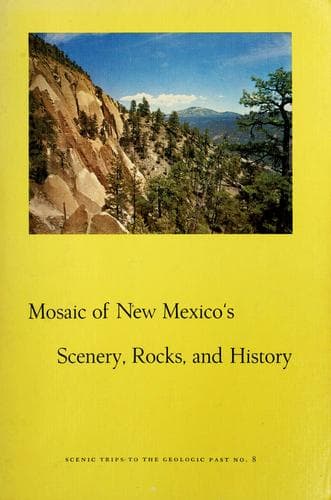
Mosaic of New Mexico's Scenery, Rocks, and History
History
Mosaic of New Mexico's Scenery, Rocks, and History
Geology -- New Mexico; New Mexico -- Description and travel; New Mexico -- History
At the very apex of the cultural efflorescence of the Great Pueblo
period, some unknown circumstance or series of events caused abandonment
of most of the urban centers of the San Juan Anasazi and Mogollon areas.
A prolonged drouth is recorded by tree rings formed during the period
from 1276 to 1299 A.D. Surely a drouth of this magnitude would have had
serious effects on people as dependent upon agriculture as were the
Pueblo Indians. There are some indications that alien and perhaps enemy
people were drifting into these areas at about this time, perhaps
predecessors of the modern Navajos and Apaches. The congested living
conditions of Pueblo villages undoubtedly contributed to unsanitary
conditions and social pressures that also may have contributed to shifts
in population. Many of these migrants moved into the homeland of the Rio
Grande Anasazi in the upper Rio Grande Valley, and to a lesser extent in
the central Rio Grande Valley. Some may have relocated at Zuni and other
areas along the Little Colorado River drainage extending westward into
Arizona.
[Illustration: (_Photograph courtesy of the National Park Service_)
Figure 5. Pueblo Bonito, Chaco Canyon National Monument
A multistory pueblo containing 800 rooms.]
During the Great Pueblo period, another group showing characteristics of
both the Anasazi and of non-Puebloan people occupied an area on both
sides of the Continental Divide along the eastern margin of the San Juan
Basin. This cultural phase, known as the Largo-Gallina because of the
distribution of sites in the Largo and Gallina drainage basins, is
represented by pit houses, surface rooms, and towerlike structures with
some similarities to the dwellings of the Anasazi. The black-on-white
pottery also suggests Puebloan relationships, whereas the culinary
vessels resemble those of the Navajo.
Beginning at about 1300 A.D. or shortly thereafter, a different cultural
group began to move westward from the Texas Panhandle into the plains of
northeastern New Mexico. These people of the Panhandle Aspect built
single-room structures and contiguous room pueblos resembling those in
use by the Anasazi of the Rio Grande and were skilled bison hunters,
farmers, and traders. This combination of traits suggests both Puebloan
and eastern traditions. Panhandle Aspect villages were abandoned
suddenly not long after 1400, perhaps as a result of the drouth recorded
by tree rings for the period from 1439 to 1454.
Public-domain text, read in full here on John Shaqi.
Reviews
Reviews
No reviews yet
Be the first to share your thoughts on this work.
Elsewhere in the archive
Join the Discussion
Join the discussion
Sign in to leave a comment or review.
Sign InorCreate an account