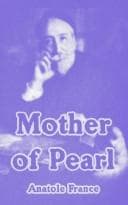
France -- Social life and customs -- Fiction; Short stories, French -- Translations into English
“I asked him whether Jean Blin, the farmer at Les Alies, had sustained a
fall the previous day as he came home in the evening. For in my part of
the country a sprain is a common Sunday occurrence, and it is not at all
rare for a man to break two or three ribs that day on leaving the
public-house. Jean Blin is not exactly a bad sort, but he likes drinking
in company, and more than once he has known what it is like to wait for
Monday’s dawn at the bottom of a miry ditch.
“The farm servant replied that there was nothing the matter with Jean
Blin, but that Éloi, Jean’s little son, was seized with fever.
“Without another thought for my espaliers, I went in search of my hat
and stick, and set out on foot for Les Alies, which is only twenty
minutes’ walk from my house. As I walked, my thoughts were on ahead with
Jean Blin’s little boy in the grip of a fever. His father was a peasant
much like every other peasant, with this peculiar difference, that the
Intelligence which created him forgot to provide him with a brain. This
great hulking Jean Blin has a head as thick as his fist. Divine wisdom
has only furnished that particular skull with what was strictly
indispensable, there’s no getting over that. His wife, the best-looking
woman in the place, is a noisy, bustling housewife, stolidly virtuous.
Well, well! To this worthy couple a child had been given, who was easily
the most delicate, the most spiritual little being that ever adorned
this old world of ours. Heredity is responsible for some of the
surprises in nature, and it has been well said that nobody knows what he
is about when he father’s a child. Heredity, according to our honoured
Nysten, is the biological phenomenon which is responsible for the fact
that, in addition to the normal type of the species, ancestors transmit
to their descendants certain peculiarities of organization and of
aptitude. I admit it. But what peculiarities are transmitted and what
are not, that is what is not very clear, even after a perusal of the
learned works of Doctor Lucas and Monsieur Ribot. My neighbour, the
notary, lent me last year a volume by Monsieur Émile Zola, and I observe
that that author takes credit for particular discernment in this
respect. ‘Here,’ he says, in substance, ‘is an ancestor afflicted with
neurosis; his descendants will show neuropathic tendencies, that is to
say, when they do not do so; amongst them will be found some foolish and
some intelligent individuals; one of them may even be a genius.’ He has
gone to the trouble of drawing up a genealogical chart to make his idea
more easily apprehended. Well and good! The discovery is not
particularly novel, and its expounder would unquestionably be
ill-advised to vaunt himself upon it; it is none the less true, however,
that it embraces practically all we know on the subject of heredity. And
this is how it came about that Éloi, Jean Blin’s little son, was an
embodied intellect. He had the creative imagination. Many a time, when
Public-domain text, read in full here on John Shaqi.
Reviews
Reviews
No reviews yet
Be the first to share your thoughts on this work.
Elsewhere in the archive
Join the Discussion
Join the discussion
Sign in to leave a comment or review.
Sign InorCreate an account