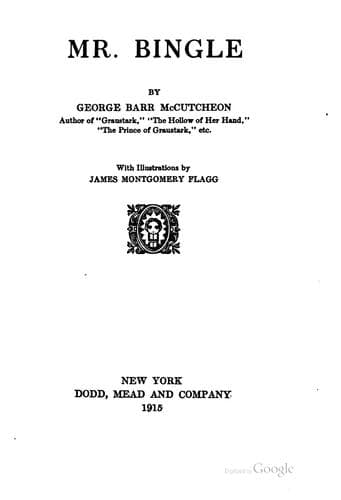
Christmas stories; Dickens, Charles, 1812-1870. Christmas carol -- Fiction; New York (N.Y.) -- Fiction
The younger members of the brood were not involved in this graceless
agitation. The complaints stopped with Guinivere. Harold, Rosemary and
Rutherford were too young to realise the state of destitution into
which the family had fallen. They were quite happy, contented and, so
far, unaware of the gravity of a situation which was more or less
apparent to their elders. Frederick, Marie Louise and Wilberforce
formed the higher group of malcontents, and their mutterings reached
the acute ears of a second and less formidable group composed of
Reginald, Henrietta and Guinivere. The influence of the three older
children, envied and imitated by the next three in order of age, was
responsible for the inclusion of this second group in the general
tendency toward unruliness and resentfulness.
Mr. Bingle sensed this unhappy condition of affairs. His soul was
sorely tried. Was he doing the right thing by these children? He was
doing his best, but was his best all that they were entitled to under
the circumstances? Was he depriving them of a bigger chance in life? He
had taken them out of the byways, but was he leading them to the
highways? The whining, peevish submission on the part of the larger
boys and girls; the unmistakable interrogation that always lurked in
their eyes; the frequent outbursts of temper; the quarrels that came up
every day among them--all of these went to prove they were sliding back
into the byways. There was no gainsaying that, he would say to himself.
Insolence, insubordination grew apace. Once Frederick, in the heat of
passion over a well-deserved rebuke, called him a "damned old fool."
Moreover, was he doing right by Mrs. Bingle? Was it possible that she
might never come back to him who loved her more than he could have
loved even a child of his own? Would he be the one to blame?
And so it came about that he finally consented to listen to the
suggestions of the cold and unemotional Mrs. Force.
The wife of the president of the bank was the sort of person who gets
into the newspapers by all the hooks and crooks known to her sex. To
begin with, she made charity a business. As Chairman of two or three
organizations declaring for the betterment of society, high and low,
she was quoted on nearly every question that came up for discussion in
the public prints. She recognised the advantage in her day of being an
anti-suffragist. She saw the value of associating herself with the
movement to create and maintain a bureau for the distribution of high
class literature among low class readers, and she belonged to a society
which elevated the stage by giving Sunday night dress rehearsals for
the benefit of destitute millionaires. She had a conspicuous box at the
Opera, and encouraged the Society for the Prevention of Cruelty to
Animals by appearing at the Horse Show in Madison Garden without spurs.
Public-domain text, read in full here on John Shaqi.
Reviews
Reviews
No reviews yet
Be the first to share your thoughts on this work.
Elsewhere in the archive
Join the Discussion
Join the discussion
Sign in to leave a comment or review.
Sign InorCreate an account