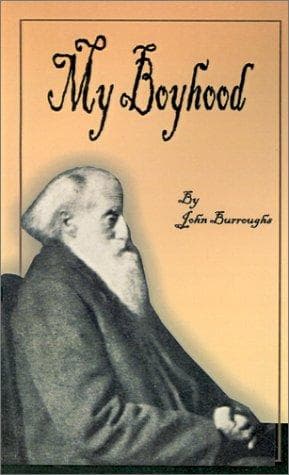
Burroughs, John, 1837-1921 -- Childhood and youth; Naturalists -- New York (State) -- Biography
Often Father tried to account for himself, how he happened to break
away from the life of his family and early environment so absolutely and
completely and become, not a weak, easy-going, though picturesque farmer
in the farther Catskills, but a man of letters, a unique and picturesque
literary craftsman. "I had it in my blood, I guess," he once said. With
it he had what most of us have, the love of the woods and fields and the
hunting and fishing. Trout fishing, the most delightful of all, had for
him a perennial charm, and bee-hunting, too, and camping out, exploring
new streams and woods. All this was fostered and developed by his farm
life and early associations, and then when he became vault keeper in the
Treasury Department in Washington he was shut up away from it all with
nothing to do but look at the steel doors. Almost without being able
to do otherwise he began to live over again the delightful days he had
spent afield by writing of them. He was like an exile dreaming of his
native land. Nature has a trick of casting a spell over those who spend
their days with her so that when the day is gone only the memories
of the delights of it remain and these become ever more beautiful and
highly coloured with time. To the homesick young man, shut up in the
vault in Washington, the scenes of his native hills took on a beauty and
charm they never could have done had he remained there among those very
hills where his eyes and senses could drink their fill every hour. It
seems to me like a lucky chance that his ambition to write, already
manifest and firmly fixed, took the course it did, writing about Nature.
"I must have been a sport," he says of himself--a born word worshipper,
a man fired with unquenchable literary ambition, a lover of the best of
the world's books, born of parents who knew not the meaning even of the
words. I doubt very much that any of his immediate family, that is of
his own generation, read a line in any of his books. His sister told him
not to write, that "it was bad for the head"--how different he was from
them all is shown in an incident Mother once related, and which can be
told only with a word of explanation. During the war he and Mother
had gone "out home," as he always spoke of visiting the parents on the
homestead, and during dinner Grandfather exclaimed: "I'd like to see Abe
Lincoln hung higher than Haman and I'd like to have hold of the rope!"
Father sat speechless with pain and amazement, then silently pushing
back his plate he rose and silently walked from the room. Then
Grandmother "went for" Grandfather. But Grandfather did not realize
what he was saying, and he would have been one of the very last to have
harmed Lincoln, or any one else for that matter. The incident shows how
different those passionate, intense, and bitter-feeling times were from
ours, and how the spread of the magazines and the illustrated papers has
broadened and mellowed the feelings of the people.
Public-domain text, read in full here on John Shaqi.
Reviews
Reviews
No reviews yet
Be the first to share your thoughts on this work.
Join the Discussion
Join the discussion
Sign in to leave a comment or review.
Sign InorCreate an account