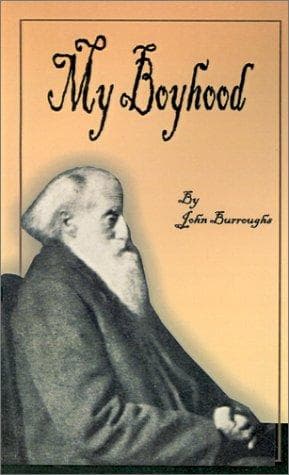
Burroughs, John, 1837-1921 -- Childhood and youth; Naturalists -- New York (State) -- Biography
Doubtless it is a wise provision of Nature that we find our mates in
our opposites. It is some natural law working for the good of the race,
something to maintain the balance and uniformity of mankind. Certainly
in many ways two people could not have been more unlike than Father and
Mother. She said he was as weak as water, and he said he could get tipsy
on a glass of water. He always said that Mother made the housekeeping an
end in itself, and she said, "You know how he is, he never takes care
of anything." How many evenings have I spent in the study when the lamp
would begin to burn low for lack of oil and Father would have to run and
fill lit and Mother would complain, "Just like you, come mussing around
after dark. Why didn't you fill it by daylight?" Ah, me, when it was
daylight Father did not need the lamp! It was Mother who filled
the lamps, trimmed them and polished the chimneys regularly in the
afternoon, while the sun was still up; but it was Father who trimmed and
filled his lamp and let it so shine that all the world might see! After
all, I am not sure but what Mother was just the wife for him; he had
a streak stubborn determination along with his ambition to write that
carried him through any trials of housecleaning or complaints about the
housework. A wife in full sympathy with his work, who coddled him and
made him think that everything he wrote was perfect, would never have
done at all, nor would a selfish, extravagant, or society-mad woman.
Father was temperamental, moody, irritable, easily influenced, easily
led, suffering at times with attacks of melancholy, with but one
fixed purpose, and that was to write. Mother was economical, thrifty,
material, suspicious of people, determined to bring their ship to a snug
harbour before old age, and she took the best of care of Father and held
him steady and no doubt by her strength of character and firmness gave
strength and firmness to his life. Their last years were most happy
together and filled with a sympathy and understanding that were
beautiful.
Sometimes Father would talk to himself, though but very seldom, and the
following two letters are almost as though he were talking to himself.
"I am far less forlorn when he is here," he says of himself and Uncle
Hiram. With all his self-analysis he did not see that being forlorn
was part of the price he must pay for the simple but intense joy he
experienced from the beauty life and Nature.
W. P. Tuesday, Jan. 25 {1897}.
MY DEAR JULIAN,
It still keeps mild here--snow nearly gone, but ice in the river to the
elbow. We do not get away yet. Your mother will not stir and Hiram and I
will probably go to Slabsides, as she wants to shut up the house.
Public-domain text, read in full here on John Shaqi.
Reviews
Reviews
No reviews yet
Be the first to share your thoughts on this work.
Elsewhere in the archive
Join the Discussion
Join the discussion
Sign in to leave a comment or review.
Sign InorCreate an account