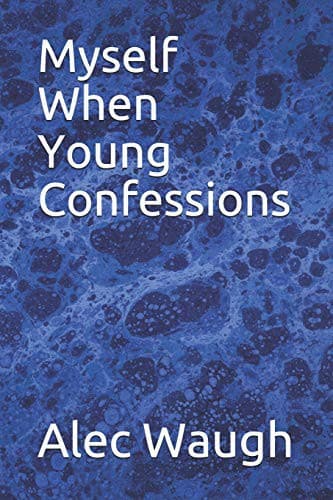
Authors, English -- 20th century -- Biography; Waugh, Alec, 1898-1981
Turgenev is always obvious. He employs none of the devices of surprise
and of suspended interest on which the writer of talent depends for his
effects. The waters of Turgenev’s narrative are so smooth, so clear, and
bring the river bed so close to us that we hardly realise how deep they
are. It is not till we see the blunders that others make with the
Turgenev technique that we realise to what an extent he is supreme. And
it is such a simple technique. The passage of youth; the waning power of
love; the recompenses of middle age; memory and regret, and a serene
twilight that harmonises and consoles. It is of these things that
Turgenev speaks--simple things, and he speaks of them simply, through a
technique that is miraculously adequate and sure. A man in the middle
years finds under two layers of cotton a little garnet cross; three men
sitting round a table talk of love; a young man, betrothed and happy,
returns at night to his hotel to recapture, in a room filled with the
overpowering scent of heliotrope, the buried anguish of an earlier love.
A man sits in a garden, and remembers. It looks so easy; and yet, in
mediocre work, how the machinery creaks. How artificial become the
excuses for recollection. A violin playing in a certain restaurant,
after many years, a tune to which the hero danced when young. A
narrative that closes where it began, in the same place, on the same
note, with the same sentence. What is pattern in Turgenev becomes in
lesser writers a series of devices.
And yet it is thus that life is always getting its effects; sometimes
with our co-operation. We return after certain months to the ball-room
where we first encountered love, to the restaurant where we first spoke
of love, to the woods that were the shelter and the screen of our first
love-making. But at such moments the scene has been set too carefully;
the climax is manufactured. We have known beforehand the nature of the
emotion we are to experience; we force it to the required pitch of
intensity. And that is bad technique. Only if we stand aside and let
life tell our story for us, shall we happen on the inevitable, the
unpremeditated moment.
In the early spring of 1921 I wrote a sketch of an ex-officer; it was an
attempt to interpret the spirit of post-war disillusionment, and I
selected as its subject a clerk in a large advertising agency and
christened him Evan Miller.
Public-domain text, read in full here on John Shaqi.
Reviews
Reviews
No reviews yet
Be the first to share your thoughts on this work.
Elsewhere in the archive
Join the Discussion
Join the discussion
Sign in to leave a comment or review.
Sign InorCreate an account